


Focusrite Scarlett 2i2 4th Gen
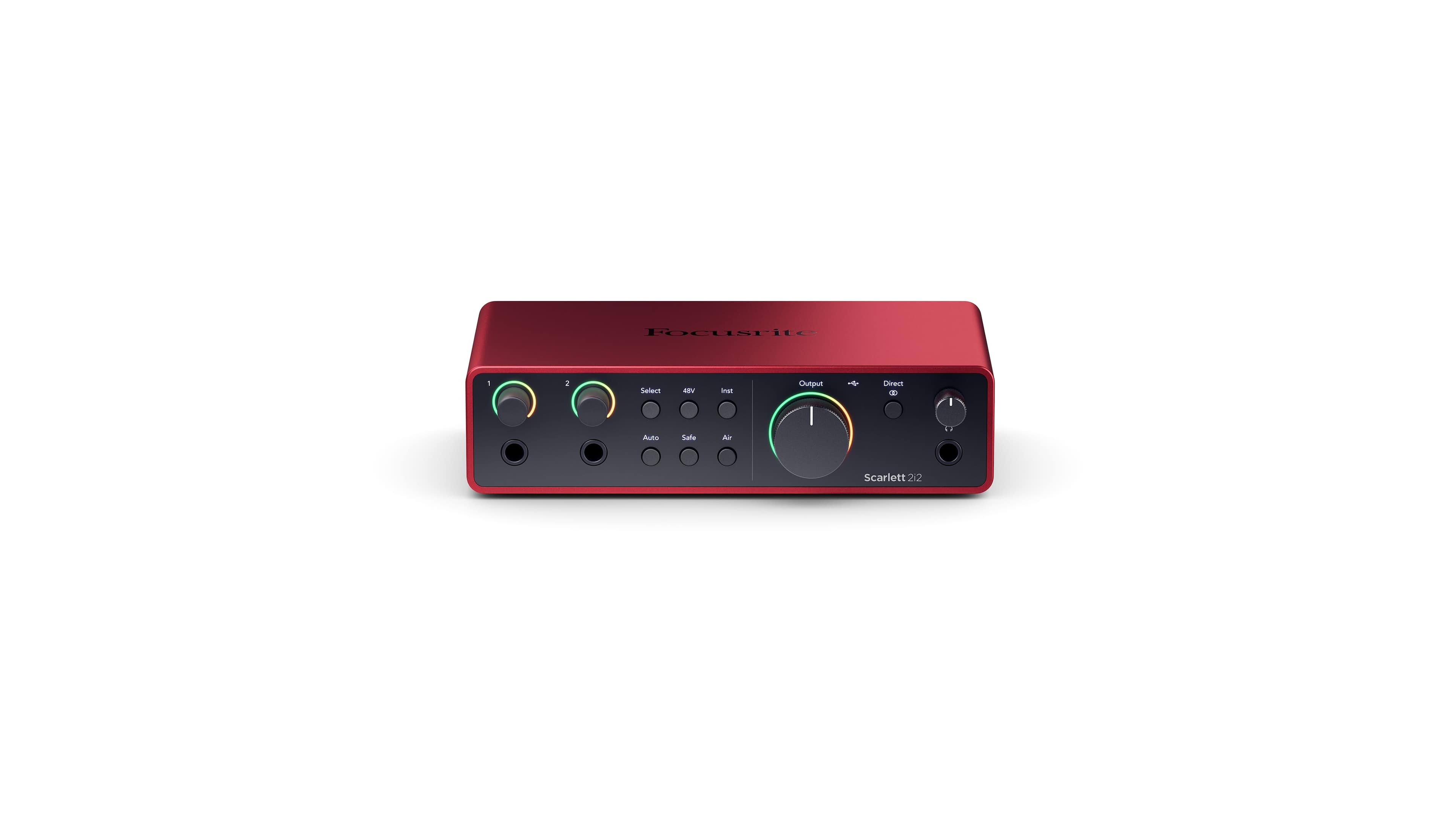
- Simultaneous I/O: 2 x 2
- Mic and instrument inputs: 2 XLR mic preamps and 2 line/Hi-Z inputs
- A/D resolution: 24-bit/192kHz
Behringer U-Phoria UMC22
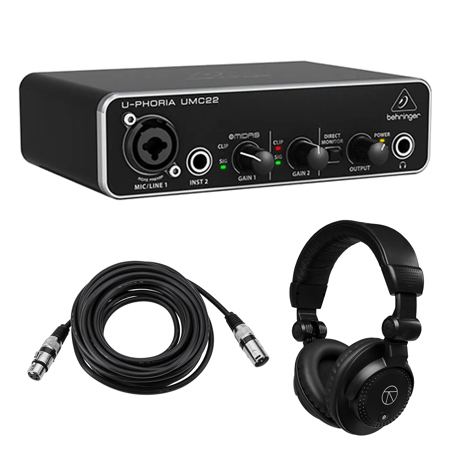
- Input and output channels: 2 input and 2 output channels
- Microphone preamp: 1 Midas-designed microphone preamp
- Resolution: Up to 24-bit / 48 kHz
Universal Audio Apollo Twin X

- Host connection: Thunderbolt 3
- Mic preamps: 2 Unison-enabled mic preamps
- Processing: QUAD Core Realtime UAD Processing
The Focusrite Scarlett 2i2 4th Gen is the best overall audio interface for a home studio here: its two preamps and two line/Hi-Z inputs suit recording a mic and instrument or two mic sources. For a different workflow, the Behringer U-Phoria UMC22 is a straightforward one-preamp option, while the Universal Audio Apollo Twin X adds documented UAD processing and a Thunderbolt 3 connection.
For the wider category, see recommended home theater and audio gear.
For a related need, compare our best microphone for recording vocals at home.
Another focused comparison is our best wireless home theater system.
How do our recommended picks compare?
| Product | Best for | Mic preamps | Instrument input | Notable documented feature |
|---|---|---|---|---|
| Focusrite Scarlett 2i2 4th Gen | A compact setup with two mic preamps and two line/Hi-Z inputs | 2 | 2 line/Hi-Z inputs | 24-bit/192kHz A/D resolution |
| Behringer U-Phoria UMC22 | One mic/line source and one Hi-Z source | 1 Midas-designed microphone preamp | 1 Hi-Z input | Up to 24-bit / 48 kHz resolution |
| Universal Audio Apollo Twin X | A setup seeking the listed UAD processing and Thunderbolt 3 connection | 2 Unison-enabled mic preamps | 1 x 1/4-inch Hi-Z input | QUAD Core Realtime UAD Processing |
Which audio interface for home studio options should you compare?
1. Focusrite Scarlett 2i2 4th Gen Best Overall
For many home-studio setups, the Focusrite Scarlett 2i2 4th Gen is the most adaptable starting point among these three choices. Its two mic preamps and two line/Hi-Z inputs support a setup built around two microphone sources or a mic alongside an instrument. The published specifications also list 2 x 2 simultaneous I/O and 24-bit/192kHz A/D resolution. One headphone output and two monitor outputs give you the documented output connections for listening through headphones or monitors. The tradeoff is that this is still a two-input interface: choose it for a compact recording setup, not for a plan that calls for more simultaneous sources than its listed inputs accommodate.
Best for Home recording with two mic preamps and two line/Hi-Z inputs.
| Simultaneous I/O | 2 x 2 |
|---|---|
| Mic and instrument inputs | 2 XLR mic preamps and 2 line/Hi-Z inputs |
| A/D resolution | 24-bit/192kHz |
Pros
- Two mic preamps.
- Two line/Hi-Z inputs.
- One headphone output and two monitor outputs.
Cons
- Its listed simultaneous I/O is 2 x 2.
- It does not have the Apollo Twin X's documented QUAD Core Realtime UAD Processing.
Buy if You want two mic preamps and the flexibility to connect line or Hi-Z sources in a compact setup.
Skip if You need an interface with more than two simultaneous inputs, or you specifically want the Apollo Twin X's documented UAD processing.
Sources: Product source Additional specifications
2. Behringer U-Phoria UMC22 Alternative Pick
The Behringer U-Phoria UMC22 is a sensible match for a home studio that needs a simple, clearly defined mic-and-instrument arrangement. Its documented connections include a combination XLR/TRS mic/line input and a separate Hi-Z input; it also has one Midas-designed microphone preamp and one headphone output. The listed resolution is up to 24-bit / 48 kHz. Those details make it easy to assess whether its input layout fits your sources before choosing it. Its documented arrangement includes one microphone preamp. Pick it for the one-preamp layout, rather than expecting two mic preamps or the Apollo's listed processing.
Best for A home-studio setup centered on one mic/line input and one Hi-Z input.
| Input and output channels | 2 input and 2 output channels |
|---|---|
| Microphone preamp | 1 Midas-designed microphone preamp |
| Resolution | Up to 24-bit / 48 kHz |
Pros
- Combination XLR/TRS mic/line input.
- Separate Hi-Z instrument input.
- Phantom power is listed.
Cons
- It has one documented microphone preamp.
- Its listed resolution is up to 24-bit / 48 kHz.
Buy if You want one Midas-designed mic preamp, a separate Hi-Z input, and a headphone output.
Skip if You need two mic preamps, or you want the Apollo Twin X's documented processing features.
Sources: Product source Additional specifications
3. Universal Audio Apollo Twin X Another Option
The Universal Audio Apollo Twin X is the distinct choice for a home studio where its documented processing and connection are central to the decision. Its listed features include QUAD Core Realtime UAD Processing, a Thunderbolt 3 host connection, and two Unison-enabled mic preamps. It also has a 1/4-inch Hi-Z input and an optical input. This makes it worth considering when those named features match your intended recording setup. The tradeoff is that its appeal depends on whether you want the listed UAD processing and Thunderbolt 3 connection. Compare your source needs and preferred connection before making it your pick.
Best for Home-studio users seeking the listed UAD processing and Thunderbolt 3 connection.
| Host connection | Thunderbolt 3 |
|---|---|
| Mic preamps | 2 Unison-enabled mic preamps |
| Processing | QUAD Core Realtime UAD Processing |
Pros
- QUAD Core Realtime UAD Processing.
- Two Unison-enabled mic preamps.
- A 1/4-inch Hi-Z input and an optical input are listed.
Cons
- Its host connection is Thunderbolt 3, a specific connection to consider in your setup.
- Its defining documented feature set may be unnecessary if you want a simpler input-focused choice.
Buy if You want QUAD Core Realtime UAD Processing, two Unison-enabled mic preamps, and a Thunderbolt 3 host connection.
Skip if You do not need the listed UAD processing, or you prefer the Scarlett's documented 2 x 2 simultaneous I/O specification.
Sources: Product source
How did we choose these recommendations?
- We compared published specifications and documented features, including input and output counts, preamp arrangements, and listed recording resolution where available.
- We considered whether each interface's documented inputs match common home-studio tasks, such as recording a microphone, instrument, or more than one source.
- We distinguished the Apollo Twin X's documented processing and host connection from the other interfaces' documented specifications without assuming that one feature suits every setup.
- We organized the recommendations by practical recording use, not price: the best fit depends on the sources you record and the features you want.
We researched and compared published product specifications, documented features, and the sources linked beside each pick.
What should you look for when choosing audio interface for home studio?
List the sources you record together
Write down which microphones, instruments, or line-level sources you need to connect at the same time. The Scarlett documents two mic preamps and two line/Hi-Z inputs. The UMC22 documents one combination mic/line input and one Hi-Z input. The Apollo Twin X lists two Unison-enabled mic preamps and one Hi-Z input. Compare that arrangement against your actual sessions.
Separate mic inputs from instrument inputs
Input counts alone can hide important differences. A mic preamp, a combination mic/line input, and a Hi-Z input describe different documented roles in these product listings. For example, the UMC22 has one Midas-designed mic preamp and one Hi-Z input; the Scarlett lists two mic preamps and two line/Hi-Z inputs. Choose by source type as well as count.
Check the features you specifically want
Do not choose a feature just because it sounds advanced; decide whether it fits your workflow. The Apollo Twin X's listed QUAD Core Realtime UAD Processing and Thunderbolt 3 connection distinguish it. The Scarlett lists 24-bit/192kHz A/D resolution, while the UMC22 lists up to 24-bit / 48 kHz resolution. Keep comparisons tied to documented details.
Plan your listening connections
Consider how you intend to monitor recordings. The Scarlett listing specifies one headphone output and two monitor outputs. The UMC22 lists one headphone output and stereo 1/4-inch line output. Those documented outputs can help you determine whether an interface's connections fit your setup. Check the complete product details for the model you select before making a purchase.
Make the tradeoff fit your next session
The best match depends on whether your priority is a flexible two-preamp layout, a one-preamp mic-and-instrument arrangement, or the Apollo's listed processing and host connection. Consider the sources you expect to record and the outputs you use. Avoid paying attention to a feature you will not use at the expense of an input arrangement that matters to your sessions.
For a flexible small-studio setup, the Focusrite Scarlett 2i2 4th Gen is the clearest overall choice in this comparison. Its two mic preamps and two line/Hi-Z inputs give you a documented way to connect more than one kind of source. The listed 2 x 2 simultaneous I/O keeps the choice grounded in a two-input, two-output arrangement rather than an assumption that it suits every studio.
The other picks answer different needs. The Behringer U-Phoria UMC22 has one Midas-designed preamp, a combination mic/line input, and a separate Hi-Z input. The Universal Audio Apollo Twin X is defined by its listed Thunderbolt 3 connection and UAD processing. Start with the sources you need to connect; then decide whether the Apollo's documented features or the simpler input arrangements better match your workflow.
Count the sources you expect to record at the same time, not just the microphones or instruments you own. If your plan is to record a mic and a line/Hi-Z source together, or use two mic preamps, the Scarlett's documented two-preamp arrangement and two line/Hi-Z inputs are relevant. Its simultaneous I/O is listed as 2 x 2.
The UMC22 takes a different approach: one combination XLR/TRS mic/line input and one Hi-Z input are documented, alongside one Midas-designed preamp. That layout may suit a one-mic-and-instrument plan, but it is not the same as having two mic preamps. The Apollo Twin X lists two Unison-enabled mic preamps and one Hi-Z input. Match the particular input types to your sources before you choose.
FAQ
What is the best audio interface for a home studio?
The Focusrite Scarlett 2i2 4th Gen is the best overall fit in this guide for a compact setup needing two mic preamps and two line/Hi-Z inputs. If your priorities differ, the UMC22 has a one-preamp mic-and-instrument layout, while the Apollo Twin X lists UAD processing and a Thunderbolt 3 host connection.
Can the Focusrite Scarlett 2i2 4th Gen connect two microphones?
Its published specifications list two XLR mic preamps, so the documented input arrangement includes two mic preamps. It also lists two line/Hi-Z inputs, one headphone output, and two monitor outputs. Consider whether its listed 2 x 2 simultaneous I/O matches the number of sources you intend to record at once.
What is the Behringer U-Phoria UMC22 input arrangement?
The documented layout includes a combination XLR/TRS mic/line input, one Hi-Z input, and one Midas-designed microphone preamp. It also lists 2 input and 2 output channels, phantom power, and one headphone output. Compare these inputs with the specific microphone and instrument sources you want to connect.
What distinguishes the Universal Audio Apollo Twin X?
Its documented features include a Thunderbolt 3 host connection, QUAD Core Realtime UAD Processing, and two Unison-enabled mic preamps. It also lists a 1/4-inch Hi-Z input and an optical input. Those features make it a distinct option when they are relevant to your intended setup.
Which interface is suited to recording a mic and an instrument?
All three list mic and instrument-related inputs, but their arrangements differ. The Scarlett lists two XLR mic preamps and two line/Hi-Z inputs; the UMC22 lists a combination mic/line input and one Hi-Z input; the Apollo Twin X lists two mic preamps and one Hi-Z input. Match that layout to the sources you will record together.
Should I choose by resolution alone?
No. Resolution is one documented point of comparison: the Scarlett lists 24-bit/192kHz A/D resolution, while the UMC22 lists up to 24-bit / 48 kHz. The Apollo Twin X's listed features here emphasize its connection, preamps, and processing. Input types, number of simultaneous sources, and outputs should also fit your intended workflow.
Which audio interface for home studio should you buy?
For most homes, start with the Focusrite Scarlett 2i2 4th Gen. For another option, compare the Behringer U-Phoria UMC22. Need the use-case pick? Consider the Universal Audio Apollo Twin X.
- Best Overall: Focusrite Scarlett 2i2 4th Gen
- Alternative Pick: Behringer U-Phoria UMC22
- Another Option: Universal Audio Apollo Twin X
When was this guide last updated?
- November 07, 2026: Editorial research prepared. Product specifications and source images reviewed.