


Samsung HW-Q990D 11.1.4-Channel Soundbar System

- Model and channel configuration: HW-Q990D, 11.1.4 ch
- Subwoofer: Included
- Rear speakers: Up- and side-firing rear speakers included
Polk Audio Signa S4 3.1.2-Channel Soundbar
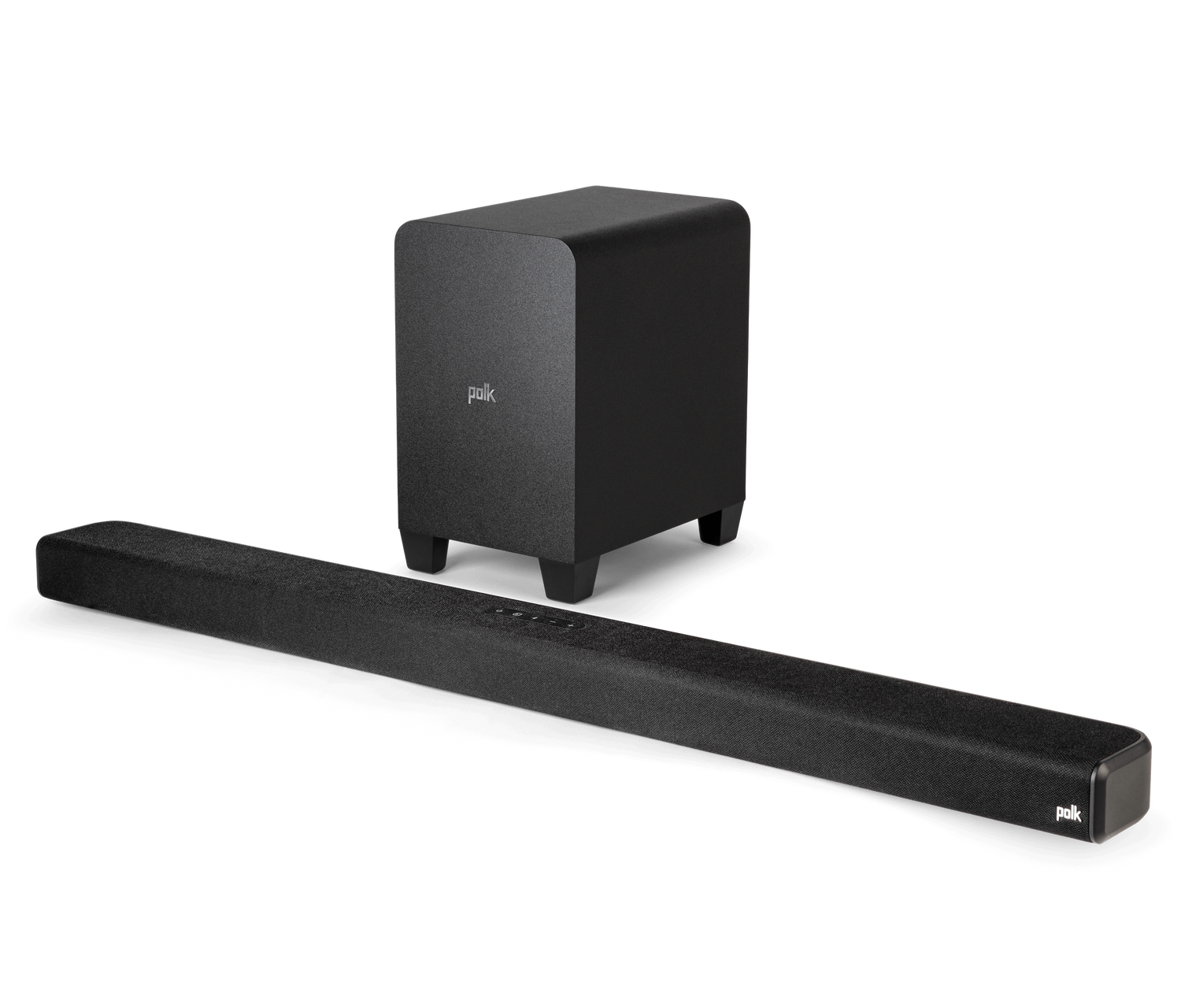
- Channel configuration: 3.1.2 channels
- Audio format: Dolby Atmos
- Wireless connectivity: Bluetooth; no Wi-Fi
Denon AVR-X1800H 7.2-Channel AV Receiver

- Amplifier configuration: Discrete seven-channel amplifier
- Amplifier design: Discrete high-current amplifiers on all channels
- Power output: Up to 80W per channel at 8 ohms
The Samsung HW-Q990D is our best overall home theater audio pick: its 11.1.4-channel system includes a subwoofer and up- and side-firing rear speakers, with Wireless Dolby Atmos. Victor Chen compares complete soundbar systems, component-based setups, stereo gear, and a USB microphone so you can match the product to the way you listen.
Start exploring this category with our best microphone for recording vocals at home.
How do our recommended picks compare?
| Product | Best for | Configuration | Wireless or network feature | Subwoofer or system component |
|---|---|---|---|---|
| Samsung HW-Q990D 11.1.4-Channel Soundbar System | Bundled soundbar surround system | True 11.1.4-channel | Wireless Dolby Atmos | Subwoofer and up-/side-firing rear speakers included |
| Polk Audio Signa S4 3.1.2-Channel Soundbar | Atmos soundbar with wired inputs | 3.1.2 channels | Bluetooth; no Wi-Fi | Wireless subwoofer |
| Sony BRAVIA Theater Quad HT-A9M2 16-Speaker Home Theater System | Flexible wireless speaker placement | 16 total speakers | Four wireless speakers | Four wireless speakers; check package contents for a subwoofer. |
| Denon AVR-X1800H 7.2-Channel AV Receiver | Receiver for a component system | Discrete seven-channel amplifier | Receiver | |
| Klipsch Reference Theater Pack 5.1 Home Theater Speaker System | Receiver-based 5.1 speaker setup | 5.1 surround sound system | Flexible system placement | Wireless subwoofer |
| SVS SB-1000 Pro 12-Inch Sealed Subwoofer | Adding a dedicated subwoofer | Sealed cabinet | App controls | Standalone subwoofer |
| Yamaha R-N600A Network Stereo Receiver | Networked stereo listening | 80 W+80 W (8 ohms) | Wi-Fi, Bluetooth, and AirPlay 2 | Stereo receiver |
| Audio-Technica AT2020USB-X Cardioid Condenser USB Microphone | USB recording | Cardioid condenser USB microphone | USB powered | Headphone level, mix, and mute controls |
Which home theater audio options should you compare?
1. Samsung HW-Q990D 11.1.4-Channel Soundbar System Best Overall
The Samsung HW-Q990D is our best overall choice for shoppers who want a surround-oriented home theater system in a soundbar package. Its true 11.1.4-channel configuration comes with a subwoofer and up- and side-firing rear speakers, while Wireless Dolby Atmos and Q-Symphony are listed features. That included hardware makes it a more complete starting point than a soundbar that leaves rear speakers out. The tradeoff is that the system includes multiple pieces to place around the room, so it is not the simplest choice for someone seeking a single-bar setup. Consider it when an enveloping system matters more than keeping the installation minimal.
Best for A bundled soundbar system with rear speakers and Wireless Dolby Atmos.
| Model and channel configuration | HW-Q990D, 11.1.4 ch |
|---|---|
| Subwoofer | Included |
| Rear speakers | Up- and side-firing rear speakers included |
Pros
- True 11.1.4-channel configuration.
- Wireless Dolby Atmos is supported.
- Subwoofer and rear speakers are included.
Cons
- Includes multiple components to position in the room.
- Multiple included components need placement around the room.
Buy if You want an 11.1.4-channel system with a subwoofer and rear speakers included.
Skip if You prefer a single soundbar without separate rear speakers or a subwoofer.
Sources: Product source
2. Polk Audio Signa S4 3.1.2-Channel Soundbar Alternative Pick
The Polk Audio Signa S4 is a Dolby Atmos soundbar with a wireless subwoofer for shoppers who want a 3.1.2-channel setup. Its listed playback includes front overhead channels, and its connections include HDMI eARC, digital optical, and analog 3.5mm. It uses Bluetooth and does not have Wi-Fi. Consider it if you want a soundbar and subwoofer without rear speakers; compare other system configurations if rear speakers are important to you.
Best for A Dolby Atmos soundbar with a wireless subwoofer and multiple wired inputs.
| Channel configuration | 3.1.2 channels |
|---|---|
| Audio format | Dolby Atmos |
| Wireless connectivity | Bluetooth; no Wi-Fi |
Pros
- Includes a wireless subwoofer.
- Offers HDMI eARC, digital optical, and analog 3.5mm inputs.
- Supports Bluetooth; it does not have Wi-Fi.
Cons
- Its 3.1.2-channel configuration does not include rear speakers.
- Bluetooth-only wireless connectivity; no Wi-Fi.
Buy if You want a simpler Atmos soundbar and do not need rear speakers or Wi-Fi.
Skip if You want true surround channels, rear-speaker expansion, or Wi-Fi music connectivity.
Sources: Product source
3. Sony BRAVIA Theater Quad HT-A9M2 16-Speaker Home Theater System Another Option

The Sony BRAVIA Theater Quad is a fit for shoppers who want separate wireless speakers and flexibility in where they sit in the room. The system has four wireless speakers and a control box, with 16 total speakers and 360 Spatial Sound Mapping that can create up to 12 phantom speakers. Its support for Dolby Atmos, DTS:X, and IMAX Enhanced gives format-focused buyers several documented options. The four physical speakers still need placement, even though they connect wirelessly to the control box. Check package contents if an included subwoofer matters to you.
Best for Flexible placement with four wireless speakers and spatial-mapping features.
| Speaker count | 16 total speakers |
|---|---|
| Wireless speakers | Four |
| Supported audio formats | Dolby Atmos, DTS:X, and IMAX Enhanced |
Pros
- Four wireless speakers can be positioned around the room.
- 360 Spatial Sound Mapping can create up to 12 phantom speakers.
- Supports Dolby Atmos, DTS:X, and IMAX Enhanced.
Cons
- Check the package contents if an included subwoofer matters.
- The four physical speakers still need to be placed around the room.
Buy if You want a four-speaker system that supports Dolby Atmos and DTS:X.
Skip if You need a subwoofer included in the package; confirm the package contents before choosing.
Sources: Product source
4. Denon AVR-X1800H 7.2-Channel AV Receiver Another Option
The Denon AVR-X1800H is the component-system choice in this group: it is an AV receiver with a discrete seven-channel amplifier and discrete high-current amplification on all channels. Published specifications list up to 80 watts per channel at 8 ohms. That makes it relevant to shoppers planning around a receiver rather than a self-contained soundbar. It is a receiver, not a complete speaker package; choose speakers separately for a component setup. Choose it when a receiver is the missing part of your setup, and confirm that your speaker plan suits the receiver before buying.
Best for A component-based system where an AV receiver is needed.
| Amplifier configuration | Discrete seven-channel amplifier |
|---|---|
| Amplifier design | Discrete high-current amplifiers on all channels |
| Power output | Up to 80W per channel at 8 ohms |
Pros
- Uses a discrete seven-channel amplifier.
- Discrete high-current amplifiers are specified on all channels.
- Published output is up to 80W per channel at 8 ohms.
Cons
- It is a receiver, not a complete speaker package.
- A receiver alone is not a complete speaker package.
Buy if You are choosing a receiver and have a separate speaker plan.
Skip if You want an all-in-one soundbar or a complete speaker bundle.
Sources: Product source
5. Klipsch Reference Theater Pack 5.1 Home Theater Speaker System

The Klipsch Reference Theater Pack is a 5.1 speaker package designed to pair with an A/V receiver. It includes a wireless subwoofer and is described as having flexible placement, making it a relevant option for shoppers assembling a conventional speaker-based home theater rather than buying a soundbar. Its documented driver features include spun copper IMG woofers and Linear Travel Suspension horn-loaded tweeters. The key tradeoff is that this is not a standalone soundbar or a receiver: its stated design expects a separate A/V receiver. Choose it when you want a speaker package and have a compatible receiver plan; skip it if you need one box that connects directly as a complete system.
Best for A receiver-based 5.1 speaker package with a wireless subwoofer.
| System configuration | 5.1 surround sound system |
|---|---|
| Subwoofer | Wireless subwoofer |
| Receiver compatibility | Designed to pair with an A/V receiver |
Pros
- A 5.1 surround speaker package.
- Includes a wireless subwoofer.
- Flexible system placement is a documented feature.
Cons
- Designed to pair with a separate A/V receiver.
- Not a standalone soundbar system.
Buy if You want a speaker system designed to pair with an A/V receiver.
Skip if You do not have or plan to choose an A/V receiver.
Sources: Product source
6. SVS SB-1000 Pro 12-Inch Sealed Subwoofer
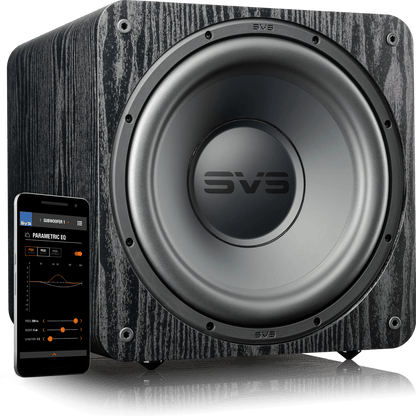
The SVS SB-1000 Pro is a standalone sealed subwoofer for shoppers who want to add bass capability to a home theater or stereo speaker system. Its published specifications include a 12-inch high-excursion driver, a 325-watt RMS amplifier rating, and a 20–270 Hz frequency response at ±3 dB. A smartphone app provides volume, DSP-function, and custom-preset controls. These are useful details for comparing a dedicated bass component, but this product is not a full speaker system or receiver. The practical question is whether your existing system has a suitable place for a separate subwoofer. Choose it as an add-on component, not as a replacement for the rest of a theater setup.
Best for Adding a dedicated sealed subwoofer to an existing speaker system.
| Driver | 12-inch high-excursion driver |
|---|---|
| Amplifier rating | 325 watts RMS (820+ watts peak) |
| Enclosure | Sealed cabinet |
Pros
- Dedicated subwoofer component for home theater or stereo.
- Smartphone app offers volume, DSP, and preset controls.
- Published frequency response is 20–270 Hz ±3 dB.
Cons
- A subwoofer alone is not a complete speaker system.
- Requires a separate system to provide the other speakers.
Buy if You already have, or are planning, a separate speaker system.
Skip if You need a complete home theater system rather than one component.
Sources: Product source
7. Yamaha R-N600A Network Stereo Receiver

The Yamaha R-N600A is the stereo-focused choice for shoppers who want a network receiver for music listening rather than a surround sound package. Its published specifications list Wi-Fi, Bluetooth, AirPlay 2, USB input, Ethernet, and rated output of 80 W+80 W at 8 ohms. Those features make it a useful match for a stereo system that benefits from several listed ways to connect and stream. The tradeoff is intent: this product is a network stereo receiver, not a documented multi-channel home theater receiver or bundled speaker system. Choose it for stereo listening and compatible sources; look elsewhere if you are shopping specifically for a surround sound setup.
Best for A stereo listening setup with network and wireless connections.
| Rated output power | 80 W+80 W (8 ohms) |
|---|---|
| Wi-Fi | Yes |
| AirPlay | Yes (AirPlay 2) |
Pros
- Supports Wi-Fi, Bluetooth, and AirPlay 2.
- Includes USB input and Ethernet.
- Rated output power is 80 W+80 W at 8 ohms.
Cons
- It is a stereo receiver, not a documented surround system.
- It is a stereo receiver, not a bundled speaker package.
Buy if You want a stereo receiver with Wi-Fi, Bluetooth, and AirPlay 2.
Skip if You need a documented surround receiver or a complete speaker bundle.
Sources: Product source
8. Audio-Technica AT2020USB-X Cardioid Condenser USB Microphone

The Audio-Technica AT2020USB-X is the audio-recording option in this guide, not a home theater playback product. It is a USB-powered cardioid condenser microphone with headphone-level, mix, and mute controls. Published details also list a 20 Hz to 20 kHz frequency response and support for sampling rates up to 24-bit / 96 kHz. The included USB-C to USB-A cable and adapter help define the documented connection package. This makes it relevant if your broader home audio setup includes recording, voice work, or computer audio capture. Skip it if you are choosing speakers, a soundbar, a receiver, or a subwoofer to play TV and movie sound.
Best for USB microphone recording as part of a home audio workspace.
| Power source | USB powered |
|---|---|
| Supported sampling rates | 44.1, 48, 88.2, and 96 kHz |
| Controls | Headphone level, mix, and mute controls |
Pros
- USB-powered microphone with headphone-level, mix, and mute controls.
- Includes a USB-C to USB-A cable and adapter.
- Supports sampling rates up to 96 kHz.
Cons
- A microphone is not a home theater playback system.
- It is a microphone, not a speaker or TV-audio playback device.
Buy if You need a USB-powered microphone with onboard mix and mute controls.
Skip if You are shopping for home theater speakers or TV audio playback.
Sources: Product source Additional specifications
How did we choose these recommendations?
- Compared published specifications and documented features, including system configuration, connectivity, and included components.
- Separated complete systems from individual components so recommendations reflect what each product is designed to do.
- Matched each pick to a defined use, such as a bundled surround setup, a component system, or stereo listening.
- Weighed practical tradeoffs documented for each product, including connections and setup flexibility.
We researched and compared published product specifications, documented features, and the sources linked beside each pick.
What should you look for when choosing home theater audio?
Start with the system type
Decide whether you want a soundbar system, separate speakers and an AV receiver, or one component to add to gear you already own. The Samsung and Polk are soundbar systems; the Klipsch pack is designed to pair with a receiver; and the Denon is a receiver. The SVS is a standalone subwoofer, not a complete system.
Check what comes in the setup
Compare included speakers and bass components before choosing. Samsung lists a subwoofer and rear speakers as included. Polk’s 3.1.2-channel configuration includes a wireless subwoofer but not rear speakers. Sony includes four wireless speakers; check the package contents if you need a subwoofer included. The Klipsch pack includes a wireless subwoofer and is designed for receiver use.
Match connectivity to your sources
Check the connections and wireless features relevant to your listening. Polk lists HDMI eARC, digital optical, analog 3.5mm, and Bluetooth, but no Wi-Fi. Yamaha lists Wi-Fi, Bluetooth, AirPlay 2, USB input, and Ethernet. Samsung lists Wireless Dolby Atmos as an audio feature; do not assume it has a particular connection that is not listed.
Choose formats and channels intentionally
If format support matters, compare it alongside the physical system configuration. Polk documents Dolby Atmos and 3.1.2-channel playback. Samsung lists true 11.1.4-channel sound and Wireless Dolby Atmos. Sony lists Dolby Atmos, DTS:X, and IMAX Enhanced. These different layouts serve different setups; a format label alone does not make their configurations identical.
Separate playback from recording
A home theater system plays TV and movie audio; a microphone captures audio. The AT2020USB-X is a USB-powered cardioid condenser microphone with mix and mute controls. It may suit a home recording setup, but it is not a soundbar, speaker, or receiver. Keep the intended task in view when comparing products listed under the broad home audio category.
Which home theater audio system is the best overall?
The Samsung HW-Q990D is the strongest match here for a buyer seeking a soundbar-based surround system with several speakers included. Its verified configuration is true 11.1.4-channel, and the package includes a subwoofer plus up- and side-firing rear speakers. Wireless Dolby Atmos is also a documented feature. That combination gives the product a clear role: a more complete system than a soundbar that leaves rear speakers out.
The best fit changes if your priorities differ. The Sony BRAVIA Theater Quad offers four wireless speakers and 360 Spatial Sound Mapping, while the Polk Signa S4 offers a 3.1.2-channel Atmos soundbar with a wireless subwoofer. For component-based systems, the Denon receiver and Klipsch speaker pack are distinct pieces of a setup, not stand-alone replacements for a complete soundbar package.
Do you want a soundbar or separate home theater speakers?
A soundbar is the straightforward category to explore if you want the primary audio components grouped around the TV. Both Samsung and Polk are soundbar systems, but their layouts differ: Samsung includes rear speakers, while Polk’s 3.1.2-channel configuration has front overhead channels and does not include rear speakers.
Separate speakers suit a different plan. The Klipsch Reference Theater Pack is designed to pair with an A/V receiver, and the Denon AVR-X1800H is a receiver rather than a speaker bundle. Think of these as choices within a component system: select the receiver and speakers as compatible parts instead of expecting one product to do both jobs. The Sony Quad sits between those approaches, using four physical wireless speakers connected to a control box.
FAQ
Which pick includes both rear speakers and a subwoofer?
The Samsung HW-Q990D includes a subwoofer and up- and side-firing rear speakers. Its documented configuration is true 11.1.4-channel, and Wireless Dolby Atmos is listed as a feature. The Sony system has four wireless speakers; check its package contents if you need a subwoofer included. Polk has a 3.1.2-channel configuration with a wireless subwoofer and no rear speakers.
Which soundbar pick supports Dolby Atmos?
Both the Samsung HW-Q990D and Polk Audio Signa S4 list Dolby Atmos-related features. Samsung specifies Wireless Dolby Atmos and a true 11.1.4-channel configuration. Polk is a Dolby Atmos 3.1.2-channel soundbar with front overhead channels and a wireless subwoofer. Their configurations and included rear-speaker arrangements differ, so compare those as well as the format.
Does the Polk Signa S4 include rear speakers?
No. The Signa S4 has 3.1.2-channel playback with front overhead channels and a wireless subwoofer; its configuration does not include rear speakers. It has HDMI eARC, digital optical, and analog 3.5mm inputs.
Is the Sony BRAVIA Theater Quad supplied with a subwoofer?
The listed system includes four wireless speakers and a control box. Check the package contents if an included subwoofer matters. The system supports Dolby Atmos, DTS:X, and IMAX Enhanced, and 360 Spatial Sound Mapping can create up to 12 phantom speakers.
Can I use the Denon receiver without separate speakers?
The Denon AVR-X1800H is an AV receiver, not a complete speaker package. Its verified facts describe a discrete seven-channel amplifier and output of up to 80 watts per channel at 8 ohms. Pairing it with speakers is part of building a component system. If you want a complete package rather than separate components, compare the soundbar systems.
Is the Audio-Technica microphone suitable for TV sound?
The AT2020USB-X is a USB microphone intended for recording, not a TV speaker or playback system. It is USB powered and has headphone-level, mix, and mute controls. For TV and movie audio, compare soundbars, speaker systems, receivers paired with speakers, or a subwoofer as an addition to a system.
Which home theater audio should you buy?
For most homes, start with the Samsung HW-Q990D 11.1.4-Channel Soundbar System. For another option, compare the Polk Audio Signa S4 3.1.2-Channel Soundbar. Need the use-case pick? Consider the Denon AVR-X1800H 7.2-Channel AV Receiver.
- Best Overall: Samsung HW-Q990D 11.1.4-Channel Soundbar System
- Alternative Pick: Polk Audio Signa S4 3.1.2-Channel Soundbar
- Another Option: Denon AVR-X1800H 7.2-Channel AV Receiver
When was this guide last updated?
- November 07, 2026: Editorial research prepared. Product specifications and source images reviewed.