


Focal Shape 65

- Drivers: 6.5″ flax-sandwich-cone midrange-woofer and 1″ aluminum-magnesium inverted-dome tweeter
- Inputs: Unbalanced RCA and balanced XLR
- Frequency response: 40Hz–35kHz, ±3dB
JBL 305P MkII
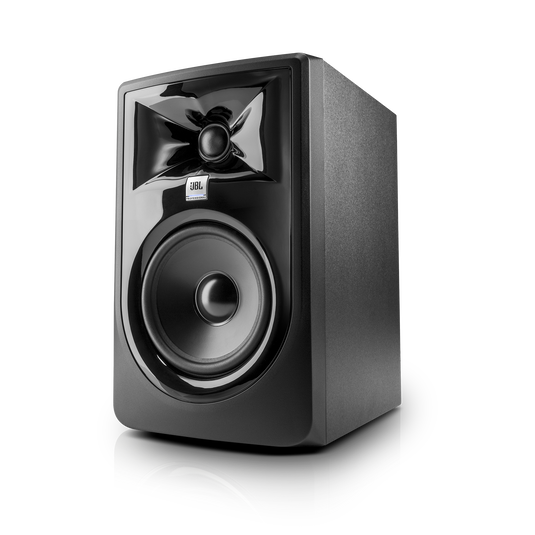
- LF driver size: 127 mm (5 inches)
- HF driver: 25 mm (1 inch) soft dome
- Inputs and sensitivity: Balanced XLR and 1/4-inch TRS inputs; +4dBu/-10dBv sensitivity options
KRK Rokit RP5 G5

- Woofer and tweeter: 5-inch Kevlar woofer and 1-inch silk dome tweeter
- EQ presets: 25 visual graphic EQ presets
- Inputs: Balanced XLR / 6.3 mm jack combo input
The Focal Shape 65 is the best overall home studio monitor in this guide: its studio-monitor design, 6.5-inch driver, and balanced XLR and unbalanced RCA inputs make it a flexible choice for a home recording setup. For a compact 5-inch option, compare the Yamaha HS5, JBL 305P MkII, and KRK Rokit RP5 G5 by their documented connections and features.
For the wider category, see home theater and audio gear buying advice.
For a related need, compare our best home karaoke machine.
Another focused comparison is our best projector screen for home theater.
How do our recommended picks compare?
| Product | Best for | LF driver | Additional driver or monitor detail | Inputs |
|---|---|---|---|---|
| Focal Shape 65 | RCA and XLR connectivity | 6.5″ flax-sandwich-cone midrange-woofer | 1″ aluminum-magnesium inverted-dome tweeter | Unbalanced RCA and balanced XLR |
| JBL 305P MkII | Balanced XLR or 1/4-inch TRS sources | 127 mm (5 inches) | 25 mm (1 inch), soft dome | Balanced XLR and 1/4-inch TRS |
| Yamaha HS5 | A documented 2-way bi-amp powered monitor | 5-inch cone | 2-way bi-amp powered studio monitor | Balanced XLR and PHONE |
| KRK Rokit RP5 G5 | EQ presets and voicing modes | 5-inch Kevlar woofer | 1-inch silk dome tweeter | Balanced XLR / 6.3 mm jack combo |
Which home studio monitors options should you compare?
1. Focal Shape 65 Best Overall
The Focal Shape 65 is the best overall pick for a home studio where the monitor may also serve a broader listening setup. Its documented 6.5-inch flax-sandwich-cone midrange-woofer and 1-inch aluminum-magnesium inverted-dome tweeter give shoppers concrete driver details to weigh, while RCA and XLR inputs provide two connection formats. The published frequency response is 40Hz–35kHz, ±3dB. Its size and weight are worth considering before placing it on a crowded desk: each speaker measures 14 inches high and weighs 18.75 pounds. That makes careful placement planning more important than it is for the smaller Yamaha HS5. Choose it for its combination of studio-monitor purpose and connection flexibility, not as a universal answer for every room.
Best for Home studios that want a 6.5-inch driver and both RCA and XLR inputs.
| Drivers | 6.5″ flax-sandwich-cone midrange-woofer and 1″ aluminum-magnesium inverted-dome tweeter |
|---|---|
| Inputs | Unbalanced RCA and balanced XLR |
| Frequency response | 40Hz–35kHz, ±3dB |
Pros
- Offers both unbalanced RCA and balanced XLR inputs.
- Uses a documented 6.5-inch flax-sandwich-cone midrange-woofer.
- Published frequency response is 40Hz–35kHz, ±3dB.
Cons
- Its 14-inch height and 18.75-pound weight call for deliberate placement.
- The 6.5-inch driver configuration may be more speaker than a compact desktop setup needs.
Buy if You want a studio monitor with RCA and XLR inputs and a documented 6.5-inch midrange-woofer.
Skip if You have limited room for a speaker measuring 14 inches high and weighing 18.75 pounds.
Sources: Product source
2. JBL 305P MkII Alternative Pick
The JBL 305P MkII is a strong alternative for a home studio whose interface or other audio equipment uses balanced XLR or 1/4-inch TRS connections. It has a 5-inch low-frequency driver and a 1-inch soft-dome high-frequency driver, with documented input sensitivity options of +4dBu and -10dBv. That makes checking the source equipment’s output level a sensible step before connecting the monitor. Its driver sizes place it among the compact-format choices here, while its connection and sensitivity details help distinguish it from the other 5-inch models. Choose it when its documented inputs match the gear already on your desk. It is less compelling if RCA connectivity is a requirement, since RCA is not among its listed inputs.
Best for Setups using balanced XLR or 1/4-inch TRS connections.
| LF driver size | 127 mm (5 inches) |
|---|---|
| HF driver | 25 mm (1 inch) soft dome |
| Inputs and sensitivity | Balanced XLR and 1/4-inch TRS inputs; +4dBu/-10dBv sensitivity options |
Pros
- Provides balanced XLR and 1/4-inch TRS inputs.
- Documents two input sensitivity options.
- Has a 5-inch low-frequency driver and a 1-inch soft-dome high-frequency driver.
Cons
- RCA is not among its documented inputs.
- Its 5-inch low-frequency driver may not suit shoppers who specifically want a larger driver.
Buy if You want XLR and 1/4-inch TRS inputs with documented sensitivity options.
Skip if You need an RCA input for your existing audio source.
Sources: Product source Additional specifications
3. Yamaha HS5 Another Option

The Yamaha HS5 is a straightforward choice for shoppers who want a powered 5-inch studio monitor and prefer to compare its published specifications directly. Yamaha identifies it as a 2-way bi-amp powered studio monitor, with a 5-inch cone LF component. The published frequency range is 54Hz–30kHz at -10dB, and the monitor has balanced XLR and phone connectors. At 170 × 285 × 222 mm and 5.3 kg, its documented cabinet measurements also make it easier to assess desk or stand space before choosing. The listed frequency range is a specification, not a guarantee of how bass will sound in a particular room. Pick it when its connectors and physical size fit your setup.
Best for Shoppers seeking a documented 5-inch, 2-way bi-amp powered monitor.
| Speaker type | 2-way bi-amp powered studio monitor |
|---|---|
| Frequency range (-10 dB) | 54 Hz–30 kHz |
| Dimensions (W × H × D) | 170 × 285 × 222 mm |
Pros
- Yamaha identifies it as a 2-way bi-amp powered studio monitor.
- Has balanced XLR and phone connectors.
- Published dimensions and weight help with placement planning.
Cons
- Its published frequency range begins at 54Hz at -10dB.
- The listed connectors do not include RCA.
Buy if You want balanced XLR and phone connectors and a published cabinet size to plan around.
Skip if You are specifically looking for a monitor with a published frequency range extending below 54Hz at -10dB.
Sources: Product source
4. KRK Rokit RP5 G5 Another Option
The KRK Rokit RP5 G5 is the most feature-focused choice here for shoppers who want documented DSP-based adjustment options. It has 25 visual graphic EQ presets and three voicing modes: Create Mode, Mix Mode, and Focus Mode. Its balanced XLR / 6.3 mm jack combo input offers two connection formats, while the 5-inch Kevlar woofer and 1-inch silk dome tweeter establish its driver configuration. This range of presets and modes can be useful to someone who wants to explore different monitor settings; it can also be more choice than a person seeking a simple, fixed setup needs. Consider it for that adjustment flexibility, while checking that its combo input suits the source equipment you already use.
Best for Home-studio users who want documented EQ presets and multiple voicing modes.
| Woofer and tweeter | 5-inch Kevlar woofer and 1-inch silk dome tweeter |
|---|---|
| EQ presets | 25 visual graphic EQ presets |
| Inputs | Balanced XLR / 6.3 mm jack combo input |
Pros
- Includes 25 visual graphic EQ presets.
- Offers Create Mode, Mix Mode, and Focus Mode.
- Has a balanced XLR / 6.3 mm jack combo input.
Cons
- Its adjustment options may be unnecessary if you want a simple, fixed setup.
- The documented input is a combo input rather than an RCA connection.
Buy if You want 25 visual graphic EQ presets and three documented voicing modes.
Skip if You prefer a simpler setup without multiple documented EQ presets and voicing modes.
Sources: Product source
How did we choose these recommendations?
- Compared published specifications and documented features, including driver details, inputs, frequency information, and adjustment options where verified.
- Prioritized practical home-studio considerations such as matching monitor inputs to existing audio equipment and checking space for the cabinet.
- Considered each monitor for a defined use rather than claiming one model is best for every room, workflow, or listening preference.
- Distinguished the recommendations through documented differences in connections, driver configurations, placement dimensions, and adjustment features.
We researched and compared published product specifications, documented features, and the sources linked beside each pick.
What should you look for when choosing home studio monitors?
Match the input to your source
Write down the output connections on the equipment feeding your monitors before comparing models. RCA, XLR, TRS, and phone inputs are not interchangeable labels. The Focal Shape 65 lists RCA and XLR; the JBL lists XLR and 1/4-inch TRS; the Yamaha lists balanced XLR and phone connectors; the KRK has an XLR / 6.3 mm jack combo input. Check the source documentation if you are uncertain about connection format or level.
Use driver details as a comparison point
Driver size and type are useful documented facts, but they do not by themselves predict how a monitor will sound in your room. The Focal has a 6.5-inch flax-sandwich-cone midrange-woofer, while the other three picks have documented 5-inch low-frequency drivers or woofers. Consider those details alongside the rest of the specification and your actual placement needs instead of treating a larger driver as an automatic improvement.
Check the space before you buy
Measure the intended desk area or speaker supports, then account for the cabinet and connection access. The Yamaha HS5 and Focal Shape 65 have published dimensions in this guide, making their physical fit easier to assess. If you are considering another model, look up its exact cabinet measurements before committing. A monitor that fits securely and leaves room for your equipment is a more practical choice than one selected from its driver size alone.
Decide whether adjustments matter to you
The KRK Rokit RP5 G5 is the clear fit if documented EQ choices are important: it lists 25 visual graphic EQ presets and three voicing modes. The JBL 305P MkII, by contrast, documents input sensitivity options alongside its balanced inputs. These features address different setup questions. Pick settings you expect to use rather than assuming more controls will automatically improve a mix or compensate for every room.
Read published specifications in context
Frequency figures are useful for comparing published specifications, but pay attention to the stated tolerance or measurement condition. Yamaha gives a frequency range of 54Hz–30kHz at -10dB; Focal gives 40Hz–35kHz, ±3dB. Those figures use different terms and should not be treated as identical measurements. Use them alongside connectivity, cabinet fit, and your intended workflow rather than as a single ranking.
Which home studio monitor is the best overall?
The Focal Shape 65 is the best overall recommendation for a home studio that can accommodate its larger cabinet. It is a studio monitor with a 6.5-inch flax-sandwich-cone midrange-woofer, a 1-inch aluminum-magnesium inverted-dome tweeter, and both unbalanced RCA and balanced XLR inputs. Those documented details make it a flexible fit for shoppers who want to connect different kinds of line-level audio equipment.
The physical details matter too. Each speaker measures 14 inches high and weighs 18.75 pounds, so check the dimensions and support of your desk or stands before ordering. Its published frequency response is 40Hz–35kHz, ±3dB. Treat that as a specification for comparison rather than a promise about the sound in your room, which depends on your setup and listening position.
What should I compare before choosing a 5-inch monitor?
The JBL 305P MkII, Yamaha HS5, and KRK Rokit RP5 G5 all have documented 5-inch low-frequency drivers or woofers, but their feature sets differ. The JBL lists balanced XLR and 1/4-inch TRS inputs, plus two input sensitivity options. The Yamaha is identified as a 2-way bi-amp powered studio monitor and lists balanced XLR and phone connectors. The KRK uses a balanced XLR / 6.3 mm jack combo input.
Look at the exact connection format, not just the driver size. Also consider whether you want documented settings to adjust: the KRK has 25 visual graphic EQ presets and three voicing modes. If those choices are not important to you, the Yamaha’s published type and connector details may make it easier to match to a straightforward setup. Compare these documented features against the connections and adjustments that matter to your workflow.
FAQ
Which monitor is the best overall for a home studio?
The Focal Shape 65 is the best overall pick here for a home studio that has room for its cabinet. It combines a documented 6.5-inch midrange-woofer with RCA and XLR inputs. Its 14-inch height and 18.75-pound weight are important placement considerations, so check your desk or stand before choosing it.
Which pick has the most documented EQ options?
The KRK Rokit RP5 G5 lists 25 visual graphic EQ presets and three voicing modes: Create Mode, Mix Mode, and Focus Mode. Choose it if those settings are useful to your workflow. If you would rather keep setup simple, compare its inputs and other documented features with the Yamaha HS5 or JBL 305P MkII.
Can I connect a monitor directly to my audio interface?
It depends on the interface outputs and the monitor inputs. This guide’s picks list different combinations: RCA and XLR on the Focal, XLR and 1/4-inch TRS on the JBL, balanced XLR and phone on the Yamaha, and an XLR / 6.3 mm jack combo on the KRK. Confirm the connector and signal level in your equipment documentation.
Are the Yamaha HS5 and JBL 305P MkII both 5-inch monitors?
Their documented low-frequency driver sizes are both 5 inches. The Yamaha uses a 5-inch cone LF component. The JBL lists a 127 mm (5-inch) LF driver and a 25 mm (1-inch) soft-dome HF driver. They differ in their documented inputs and other features.
Should I choose a monitor by frequency response alone?
No. Frequency specifications are one comparison point, and the listed figures may use different measurement conditions. Also check your connection needs, available space, driver details, and whether documented adjustment features matter to you. A published frequency range does not guarantee a particular result in your room or at your listening position.
Is the Focal Shape 65 suitable for a small desk?
Measure your desk and support before deciding. Each Focal Shape 65 measures 14 inches high, 8.6 inches wide, and 11.2 inches deep, and weighs 18.75 pounds. Those dimensions may make placement harder in a crowded workspace. Compare them with your available surface and check that the speaker can be supported securely.
Which home studio monitors should you buy?
For most homes, start with the Focal Shape 65. For another option, compare the JBL 305P MkII. Need the use-case pick? Consider the KRK Rokit RP5 G5.
- Best Overall: Focal Shape 65
- Alternative Pick: JBL 305P MkII
- Another Option: KRK Rokit RP5 G5
When was this guide last updated?
- November 07, 2026: Editorial research prepared. Product specifications and source images reviewed.