


Frigidaire FHDD5034W1

- Specified power draw and integrated energy factor: 8.5 A; 1.8 L/kWh
- Energy Star certification: Fully Energy Star certified
- Target humidity range: 35 percent to 85 percent
hOmeLabs HME1003
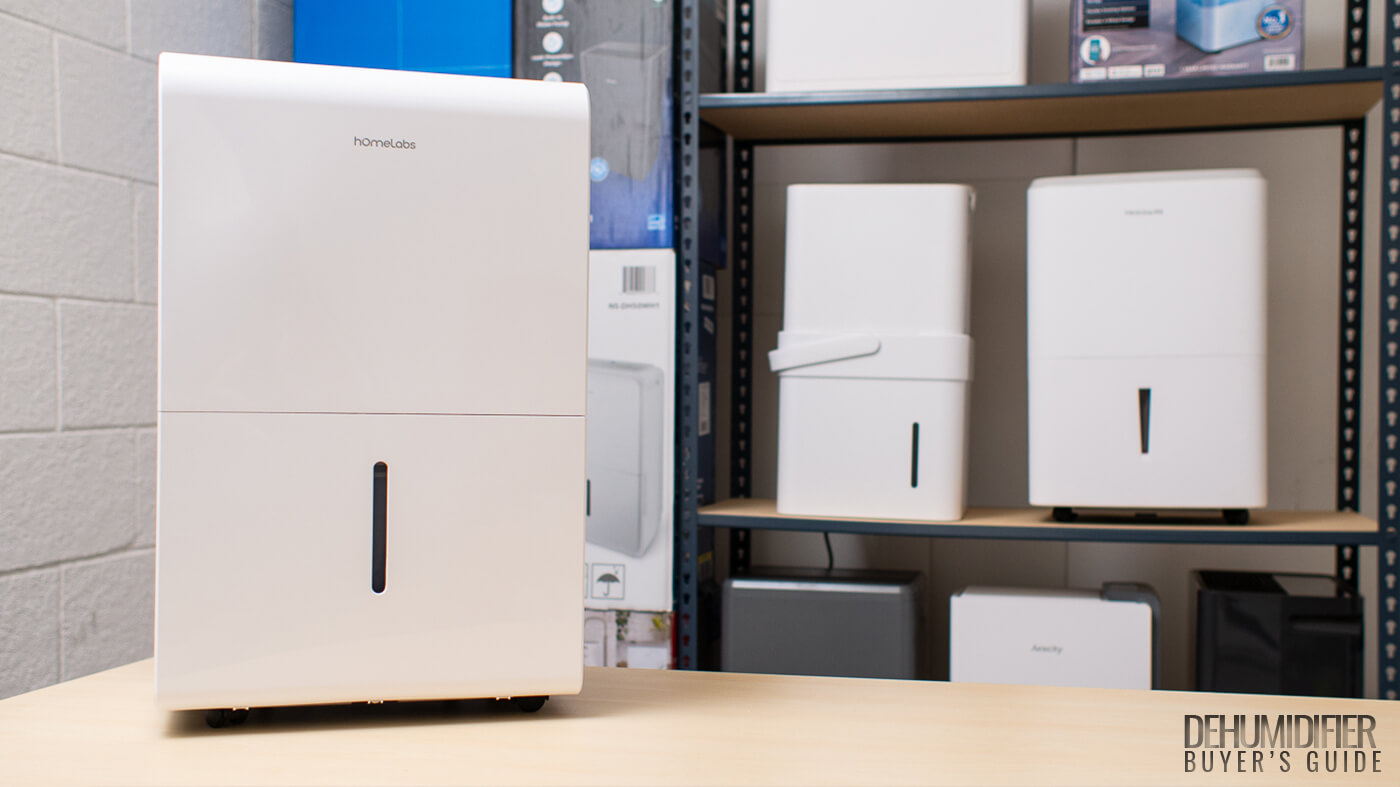
- Capacity: 50 pint
- Adjustable humidity range: 35 percent to 85 percent
- Water tank capacity: 1.6 gallons or 12.8 pints
LG PuriCare Sonoran
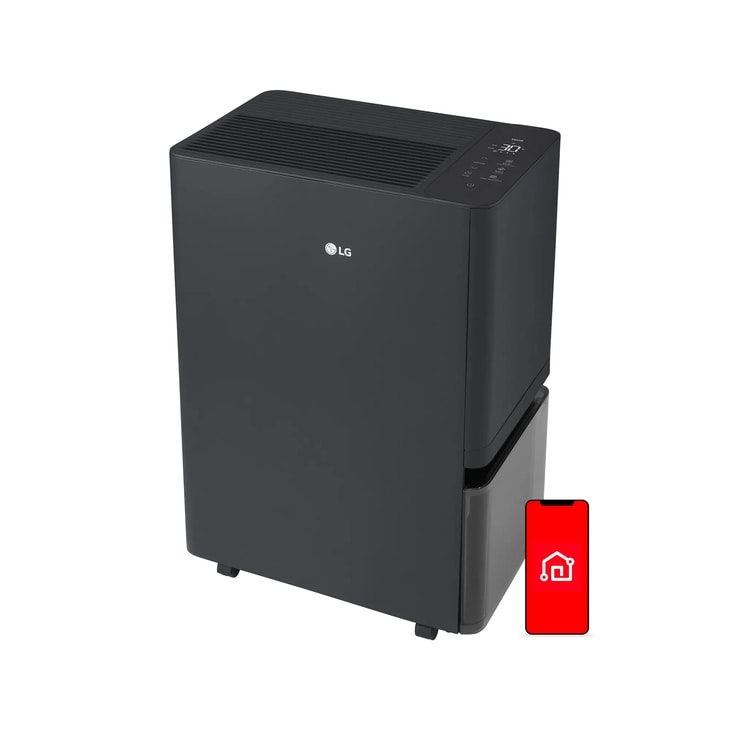
- Moisture removal: Up to 50 pints daily
- Smart modes: 4 smart modes
- Net weight: 19.7 kilograms
For a single portable unit serving a broad home area, the Frigidaire FHDD5034W1 is our best overall pick: comparative results favor its moisture-removal pace, and it combines adjustable humidity settings with Energy Star certification. These are portable dehumidifiers for managing humidity in particular areas, not centralized whole-house HVAC systems.
For the wider category, see choosing air, climate and water products.
For a related need, compare our best humidifier for home.
Another focused comparison is our best home drinking water filter.
How do our recommended picks compare?
| Product | Best for | Capacity or daily moisture removal | Humidity setting range | Documented additional feature |
|---|---|---|---|---|
| Frigidaire FHDD5034W1 | Documented comparative moisture-removal results and adjustable controls | — | 35 percent to 85 percent | Energy Star certified |
| hOmeLabs HME1003 | A 50-pint unit with adjustable humidity settings | 50 pint | 35 percent to 85 percent | 1.6-gallon water tank |
| LG PuriCare Sonoran | Smart modes and a filter-cleaning reminder | Up to 50 pints daily | — | 4 smart modes |
Which whole home dehumidifier options should you compare?
1. Frigidaire FHDD5034W1 Best Overall
The Frigidaire FHDD5034W1 is our best overall choice for shoppers who want a capable portable dehumidifier for a large home area. Published comparative testing reports particularly quick moisture removal among the high-capacity models examined, and the documented noise profile is described as more pleasant than its raw sound readings alone suggest. Its verified features include Energy Star certification, three fan speeds and a target humidity range of 35 percent to 85 percent. The tradeoff is that the unit does not show its current humidity reading on its own control panel; that reading is available through the Frigidaire app. It also has no built-in pump, so consider the intended drainage setup before choosing it.
Best for A shopper prioritizing documented moisture-removal results and a broad set of humidity controls in a portable unit.
| Specified power draw and integrated energy factor | 8.5 A; 1.8 L/kWh |
|---|---|
| Energy Star certification | Fully Energy Star certified |
| Target humidity range | 35 percent to 85 percent |
Pros
- Published comparative testing reports fast moisture removal among the high-capacity units examined.
- Energy Star certified, with a documented target humidity range of 35 percent to 85 percent.
- Three fan speeds and a documented noise profile described as pleasant in comparative assessment.
Cons
- The current humidity reading is available through the app rather than displayed on the unit itself.
- No built-in pump.
Buy if You want Energy Star certification, three fan speeds and a 35 percent to 85 percent target humidity range; search Amazon for this exact model and check its current product details.
Skip if You need the humidity reading displayed on the unit itself or require a built-in pump; search Amazon only if those tradeoffs suit your setup.
Sources: Product source
2. hOmeLabs HME1003 Alternative Pick
The hOmeLabs HME1003 is a practical alternative for shoppers who want a documented 50-pint portable dehumidifier with a defined humidity-setting range. It can be set from 35 percent to 85 percent, and published comparative results describe above-average moisture removal in the tests reported. Its 1.6-gallon water tank is the key day-to-day consideration: when collecting water in the tank rather than using hose drainage, the smaller capacity can mean emptying it more often. The published product information also lists a one-year warranty. This pick suits a shopper who values its documented capacity and controls and is comfortable planning around the tank size. It is not the best fit if minimizing tank-emptying interruptions is the main priority.
Best for Shoppers seeking a documented 50-pint unit with adjustable humidity settings and who can accommodate its smaller water tank.
| Capacity | 50 pint |
|---|---|
| Adjustable humidity range | 35 percent to 85 percent |
| Water tank capacity | 1.6 gallons or 12.8 pints |
Pros
- Documented 50-pint capacity.
- Adjustable humidity setting from 35 percent to 85 percent.
- Published comparative results report above-average moisture removal in the tests described.
Cons
- The 1.6-gallon tank is a practical drawback when using tank collection.
- The documented warranty is one year.
Buy if You want a 50-pint capacity and a 35 percent to 85 percent humidity-setting range, and the tank capacity fits your routine; search Amazon for this exact model.
Skip if You expect to rely on the water tank and want to avoid frequent emptying; search Amazon only if the 1.6-gallon capacity works for you.
Sources: Product source
3. LG PuriCare Sonoran Another Option
The LG PuriCare Sonoran is the feature-led alternative for shoppers who value multiple operating modes and a built-in maintenance reminder. Its documented specifications list removal of up to 50 pints of moisture daily, four smart modes and a filter-cleaning reminder after 350 hours of use. Those details make it easier to assess whether its controls and reminder feature match your routine. The published net weight is 19.7 kilograms, a factor to consider if you expect to move the unit between areas. The Frigidaire and hOmeLabs are highlighted for their published comparative moisture-removal findings; the LG stands out here for its stated modes, reminder and daily removal figure.
Best for Shoppers who prioritize four smart modes and a filter-cleaning reminder.
| Moisture removal | Up to 50 pints daily |
|---|---|
| Smart modes | 4 smart modes |
| Net weight | 19.7 kilograms |
Pros
- Documented removal of up to 50 pints of moisture daily.
- Four smart modes.
- Filter-cleaning reminder after 350 hours of use.
Cons
- Its documented net weight is 19.7 kilograms, worth considering if moving it is part of your plan.
Buy if You want four smart modes and a filter-cleaning reminder after 350 hours of use; search Amazon for this exact model and compare the listed product details.
Skip if You need a lighter unit for frequent moves or prefer the Frigidaire’s documented comparative moisture-removal case; search Amazon only if the LG’s listed weight and features suit you.
Sources: Product source Additional specifications
How did we choose these recommendations?
- Compared published specifications and documented features relevant to everyday selection, including moisture-removal information, humidity controls, tank capacity and care reminders.
- Compared published specifications and product details, and considered published comparative test findings for moisture removal where available.
- Weighed practical tradeoffs such as the hOmeLabs water-tank capacity and the Frigidaire’s app-dependent humidity reading.
- Matched each recommendation to a defined use case and compared the product details relevant to that use.
We researched and compared published product specifications, documented features, and the sources linked beside each pick.
What should you look for when choosing whole home dehumidifier?
Define the area you want to manage
Decide whether you want a portable appliance for one area or are looking for equipment integrated with a home system. These recommendations are portable dehumidifier options, not evidence of whole-house HVAC integration. If portable is the right category, think through where you intend to use the unit and how you will manage collected water. That keeps the product choice tied to the job rather than to a broad label.
Compare capacity and reported moisture removal
Use the product’s stated capacity or daily removal figure as a comparison point, not as a guarantee for your home. The hOmeLabs is documented as 50 pint, while the LG is specified to remove up to 50 pints daily. The Frigidaire is presented here through its favorable comparative moisture-removal results. Keep stated capacity figures and comparative test findings distinct.
Choose controls that fit your routine
A target humidity setting can be useful when you want to choose a set point: both the Frigidaire and hOmeLabs have a documented range of 35 percent to 85 percent. The Frigidaire also has three fan speeds. The LG offers four smart modes. Select features that answer a real need, and avoid assuming that more modes alone mean better moisture removal or a better fit for every room.
Plan how you will handle water
Tank capacity can affect routine when you collect water in the appliance. The hOmeLabs tank is documented at 1.6 gallons, so make that figure part of your decision. The Frigidaire does not have a built-in pump. Published information describes hose drainage for the hOmeLabs, while the LG details provided here do not define its drainage arrangement. Check the exact product listing for the configuration you plan to use.
Account for maintenance and moving
Consider where the dehumidifier will sit and whether you expect to move it. The LG has a published net weight of 19.7 kilograms and a filter-cleaning reminder after 350 hours of use. The hOmeLabs is documented at 41.2 pounds. These are useful planning details, not a substitute for checking the exact listing and product instructions before setting up or relocating a unit.
What does “whole home” mean when choosing a dehumidifier?
Start by separating a portable dehumidifier from a centralized system. The three recommendations here are household dehumidifier models, with documented features such as water tanks, humidity controls or smart modes. They are options for managing humidity in an area, not claims of integration with a home’s HVAC system or coverage of every room.
That distinction matters because “whole home” can describe two different shopping goals: reducing humidity across a connected or frequently used area with a portable appliance, or installing equipment intended to serve the home’s ventilation system. This guide is for shoppers considering the first approach. If the second is your goal, these product recommendations do not establish that any of the three is a fit.
For a portable unit, consider where it will operate, how you plan to handle collected water and which controls are useful to you. The Frigidaire has a documented target humidity range and three fan speeds; the hOmeLabs offers a documented range and a 1.6-gallon tank; the LG lists four smart modes. Match those specifics to the area and routine you have in mind.
Which of these dehumidifiers is the best overall choice?
The Frigidaire FHDD5034W1 is the best overall pick in this comparison because the documented evidence supports a balanced case: Energy Star certification, an adjustable target humidity range of 35 percent to 85 percent, and favorable comparative moisture-removal results. The published assessment also describes its noise profile positively, while noting that raw sound readings alone do not convey the character of the sound.
Its controls and tradeoffs deserve equal attention. The unit has three fan speeds, but the current humidity reading is available through its app rather than directly on its control panel. It also has no built-in pump. Those details may matter more than the overall recommendation if you want to check humidity at the appliance or have a drainage setup that requires a pump.
The pick is therefore best understood as a strong choice for shoppers who value the documented performance and controls, not a promise that it will suit every home layout or need.
FAQ
Are these whole-house HVAC dehumidifiers?
No. These recommendations are portable household dehumidifiers. They are presented for managing humidity in particular areas, not as products documented to integrate with a home’s HVAC system or dehumidify every room through central equipment. If centralized whole-house equipment is your goal, these three picks do not establish a match.
Which product is the best overall pick?
The Frigidaire FHDD5034W1 is the best overall pick in this comparison. Its case combines Energy Star certification, a 35 percent to 85 percent target humidity range and favorable published comparative moisture-removal findings. Its current humidity reading is available through the app rather than on the unit’s control panel, a tradeoff to consider.
How do the hOmeLabs and LG capacity details compare?
The hOmeLabs HME1003 is documented as a 50-pint unit. The LG PuriCare Sonoran is specified to remove up to 50 pints daily. Treat these as the stated product figures, not a promise of equivalent real-world results in every home or under every condition.
Which pick has the largest documented water tank?
The hOmeLabs HME1003 has a documented tank capacity of 1.6 gallons, or 12.8 pints. That is a decision point if you plan to collect water in the tank. The product information also describes hose drainage, which can change how much tank capacity matters to your routine.
What does the LG filter reminder do?
The LG PuriCare Sonoran has a filter-cleaning indicator that reminds you to clean after 350 hours of use. That gives you a product-specific maintenance cue. Follow the product instructions for cleaning and care, and consider the reminder alongside the LG’s four smart modes and stated daily moisture-removal figure.
Where can I look for these products?
Search Amazon using the exact model name to find a product listing. Confirm that the listing matches the model you want and review its current product details before deciding.
Which whole home dehumidifier should you buy?
For most homes, start with the Frigidaire FHDD5034W1. For another option, compare the hOmeLabs HME1003. Need the use-case pick? Consider the Frigidaire FHDD5034W1.
- Best Overall: Frigidaire FHDD5034W1
- Alternative Pick: hOmeLabs HME1003
- Another Option: LG PuriCare Sonoran
When was this guide last updated?
- November 07, 2026: Editorial research prepared. Product specifications and source images reviewed.