


WEN DF8000X
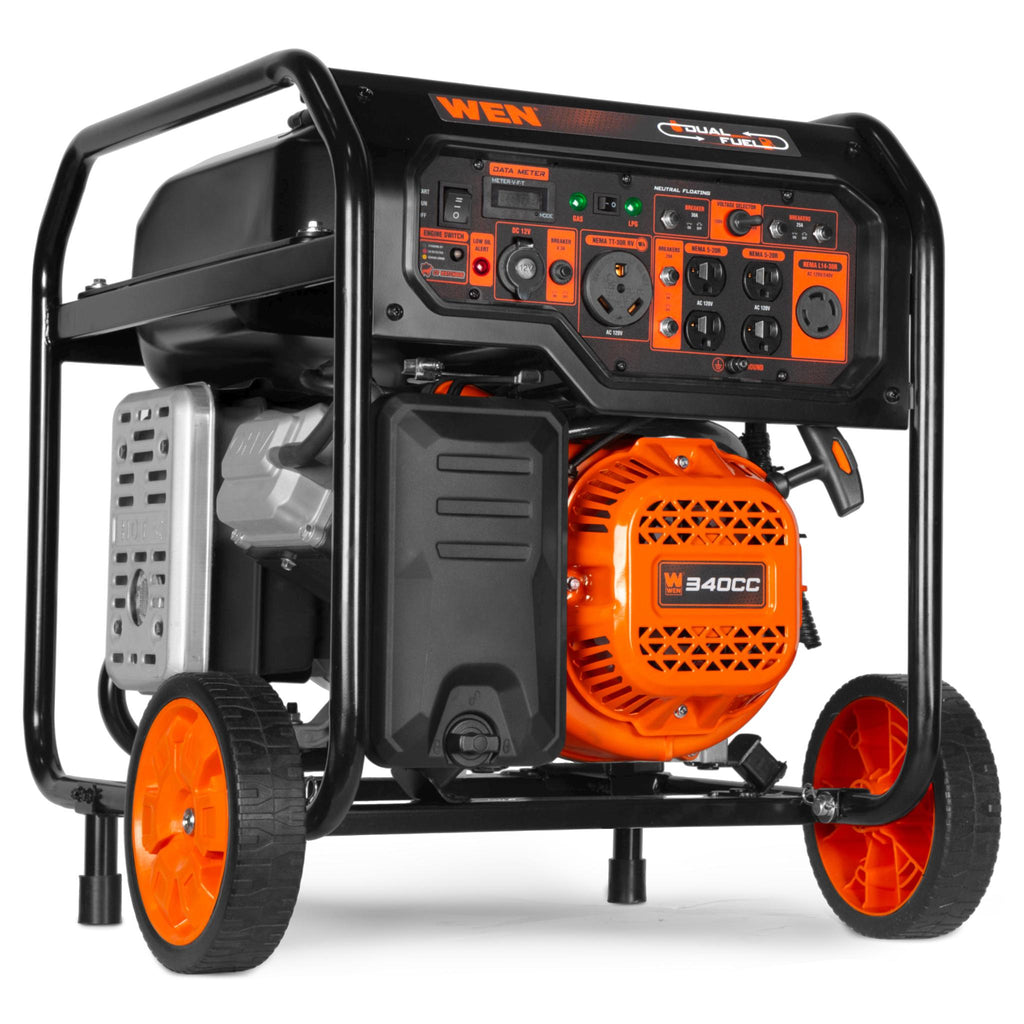
- Propane output: 7,200 surge watts and 5,850 rated watts
- Starting: Electric start with backup recoil starter
- Carbon monoxide protection: Automatically shuts off if dangerous carbon monoxide levels are detected
Wen DF475T Dual-Fuel Portable Generator
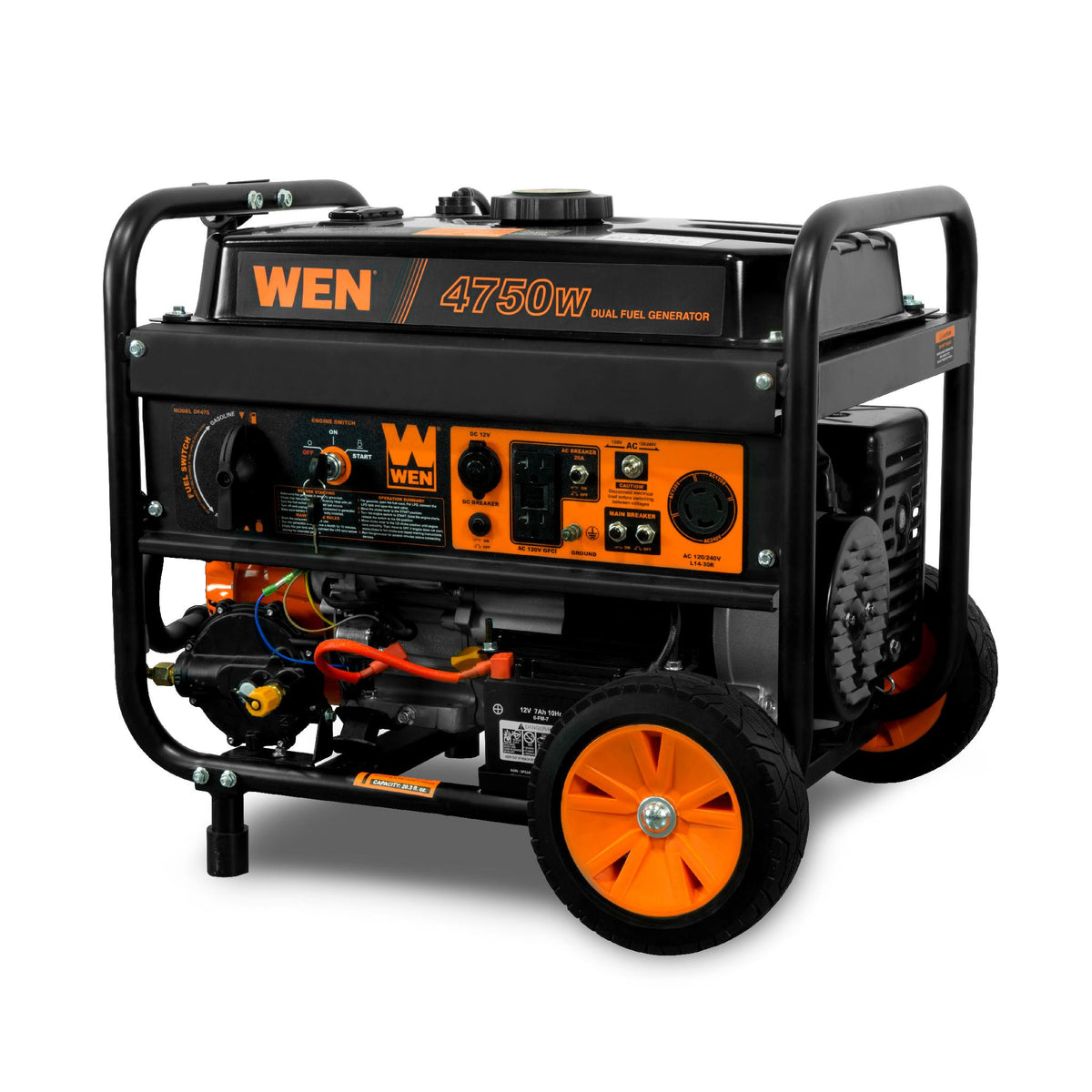
- Propane output: 4,350 surge watts, 3,500 running watts
- Voltage: 120V and 240V
- Gasoline runtime: Up to 11 hours at half load
Pulsar 2200-Watt Dual-Fuel Quiet Inverter Generator

- Fuel types: Gasoline and propane
- Gasoline runtime: Around 8 hours at 50 percent load
- USB outlet: 1x 5V USB port
The WEN DF8000X is my best overall pick for propane home backup: it provides 5,850 rated watts on propane, offers electric and backup recoil starting, and includes a transfer-switch-ready outlet and carbon monoxide shutdown sensor. Choose by your essential loads and connection plan first; the right generator is the one whose documented propane output and outlets fit both.
For the wider category, see recommended lawn and garden equipment.
For a related need, compare our best gas chainsaw for home use.
Another focused comparison is our best wood chipper for home use.
How do our recommended picks compare?
| Product | Best for | Propane running output | Starting options | Documented home-connection feature |
|---|---|---|---|---|
| Pulsar 2200-Watt Dual-Fuel Quiet Inverter Generator | Limited, planned essentials | 1,600 running watts | Pull start | 120V AC duplex outlet |
| Wen DF475T Dual-Fuel Portable Generator | Moderate propane loads and 120V/240V connection | 3,500 running watts | Electric start | 120V/240V transfer-switch-ready outlet |
| WEN DF8000X | Higher-output propane backup with CO shutdown | 5,850 rated watts | Electric start and backup recoil starter | 120V/240V transfer-switch-ready outlet |
| Westinghouse WGen7500DFc | Propane output and remote starting | 6,750 W running | Recoil, electric and remote | 120/240V L14-30R transfer-switch-ready outlet |
Which propane generator for home backup options should you compare?
1. Pulsar 2200-Watt Dual-Fuel Quiet Inverter Generator Another Option
The Pulsar is the small-output option in this group for a household that wants a portable generator for a limited set of essentials rather than a broad home-backup connection. It runs on gasoline or propane and provides a 5V USB outlet. Its 2,200-watt figure is peak output; it is rated for 1,800 running watts on gasoline and 1,600 running watts on propane. The gasoline runtime is around eight hours at 50 percent load, a useful planning reference for that fuel and load condition. Its outlets are a 120V AC duplex outlet and a USB port, rather than a 120V/240V transfer-switch connection. Make a load list before deciding whether this smaller format meets your needs.
Best for A limited set of household essentials and a portable dual-fuel format.
| Fuel types | Gasoline and propane |
|---|---|
| Gasoline runtime | Around 8 hours at 50 percent load |
| USB outlet | 1x 5V USB port |
Pros
- Runs on gasoline or propane.
- Includes a 5V USB port.
- Documented gasoline runtime gives a half-load planning reference.
Cons
- Its 2,200-watt figure is peak output; running output is 1,600 watts on propane.
- Its listed outlets are a 120V AC duplex outlet and a 5V USB port, not a 120V/240V transfer-switch connection.
Buy if You want a dual-fuel generator with a USB outlet and have confirmed your planned load fits its capacity.
Skip if You need a documented 120V/240V transfer-switch-ready outlet or a higher-output home-backup setup.
Sources: Product source
2. Wen DF475T Dual-Fuel Portable Generator Alternative Pick
The WEN DF475T suits homeowners who want an intermediate home-backup option with gasoline and propane operation, electric start and 120V/240V output. On propane, it is rated for 3,500 running watts and 4,350 surge watts; on gasoline, it is rated for 3,800 running watts and 4,750 surge watts. Plan around the propane figures if propane is your intended backup fuel. Its 120V/240V NEMA 30A twist-lock outlet is described as transfer-switch-ready, an important connection feature for a properly installed setup. The listed gasoline runtime is up to 11 hours at half load. This model is a reasonable fit when its propane output covers your prioritized loads.
Best for Homeowners who want electric start and 120V/240V connection capability at a moderate documented propane output.
| Propane output | 4,350 surge watts, 3,500 running watts |
|---|---|
| Voltage | 120V and 240V |
| Gasoline runtime | Up to 11 hours at half load |
Pros
- Offers gasoline and propane operation.
- Provides electric start.
- Includes a transfer-switch-ready 120V/240V outlet.
Cons
- Propane running output is lower than the two larger-output picks here.
- The listed runtime is for gasoline, not propane.
Buy if You need a dual-fuel generator with a transfer-switch-ready 120V/240V outlet and your load plan fits its propane rating.
Skip if You need a different format than this model offers for your space and routine.
Sources: Product source
3. WEN DF8000X Best Overall
The WEN DF8000X is the best overall match in this comparison for a homeowner seeking a higher-output propane option with a documented home-connection feature. Its propane rating is 5,850 rated watts, and its 120V/240V NEMA L14-30R outlet is transfer-switch-ready. Electric start has a backup recoil starter, while the Watchdog sensor automatically shuts the generator off if dangerous carbon monoxide levels are detected. Those features make it a strong candidate for a planned backup setup, but they do not remove the need to operate it safely outdoors or to size loads carefully. The published half-load runtime applies to its gasoline tank, not propane. Choose this model for its combination of propane output and connection features, not as a promise that it will run every household circuit.
Best for Home backup plans that need higher documented propane output, 120V/240V connection capability and a CO shutdown sensor.
| Propane output | 7,200 surge watts and 5,850 rated watts |
|---|---|
| Starting | Electric start with backup recoil starter |
| Carbon monoxide protection | Automatically shuts off if dangerous carbon monoxide levels are detected |
Pros
- Provides 5,850 rated watts on propane.
- Has a transfer-switch-ready 120V/240V outlet.
- Includes electric start, backup recoil start and a CO shutdown sensor.
Cons
- The listed half-load runtime applies to gasoline, not propane.
- Its added features do not replace safe outdoor placement or correct load planning.
Buy if You want electric and recoil starting plus a transfer-switch-ready outlet, and your load plan fits its propane rating.
Skip if You need a documented propane runtime or your intended loads require more than its propane output.
Sources: Product source
4. Westinghouse WGen7500DFc

The Westinghouse WGen7500DFc is the pick for homeowners whose priority is the highest propane running output among these four: 6,750 watts. It supports 120/240V AC and has an L14-30R outlet described as transfer-switch-ready. It offers recoil, electric and remote starting. Its CO monitoring feature is also listed, but operate it outdoors, far from openings, and never in a home or garage. At 50 percent load, the listed runtime is up to 11 hours on gasoline or 8 hours on propane. Consider it when its propane rating, runtime and connection options match your backup plan.
Best for A home-backup plan prioritizing propane running output, remote starting and a documented runtime.
| Propane output | 6,750 W running; 8,550 W starting |
|---|---|
| Starting system | Recoil, electric and remote |
| Voltage | 120/240V AC |
| Runtime at 50 percent load | Up to 11 hours on gasoline; up to 8 hours on propane |
Pros
- Has the highest propane running output among these four picks.
- Offers recoil, electric and remote starting.
- Includes carbon monoxide monitoring.
Cons
- Its listed runtime at 50 percent load is up to 8 hours on propane.
- Confirm that the documented 120/240V L14-30R outlet is compatible with your transfer equipment.
Buy if You need 6,750 running watts on propane, 120/240V AC and a remote-start option.
Skip if You need a different format than this model offers for your space and routine.
Sources: Product source
How did we choose these recommendations?
- Compared published specifications and documented features relevant to home backup, including propane output, starting options and outlet types.
- Considered whether a model has a documented 120V/240V connection suitable for a compatible transfer-switch setup.
- Looked at practical operating features such as a carbon monoxide shutdown sensor, runtime information and starting alternatives where documented.
- Matched each pick to a defined use instead of treating any generator as a fit for every home's loads or electrical setup.
We researched and compared published product specifications, documented features, and the sources linked beside each pick.
What should you look for when choosing propane generator for home backup?
List essential loads before choosing
Write down which appliances or circuits you want available during an outage and whether they need to run simultaneously. Check their requirements and account for starting needs rather than comparing only a product's largest number. Then match the plan to the propane running rating if propane is your intended fuel. Ask a qualified professional for help with a home connection plan.
Compare propane ratings directly
A dual-fuel label does not establish identical output on both fuels. Compare each product's propane-specific running and starting figures with your needs. Do not substitute gasoline ratings for propane or treat starting watts as continuous output. Confirm the relevant ratings in the product documentation before making a decision.
Check outlets and transfer equipment
A 120V/240V label is not the same thing as confirmation that a particular outlet is ready for your home's transfer equipment. The DF475T and DF8000X list transfer-switch-ready outlets. Plan a compatible installation with a qualified professional. Never connect a portable generator to household wiring in an improvised way, and follow the instructions for the generator and transfer equipment.
Treat runtime as fuel- and load-specific
Runtime figures are tied to their stated fuel and load conditions. The Pulsar, DF475T and DF8000X list gasoline runtime figures at half load; the Westinghouse WGen7500DFc lists up to 11 hours on gasoline and up to 8 hours on propane at 50 percent load. These figures do not establish runtime at a different load. Plan using the fuel and load conditions that match your intended use, and avoid treating a listed runtime as a promise of outage coverage.
Plan safe outdoor operation
Portable generators must be operated outdoors, far from openings, and never indoors or in a garage. A carbon monoxide sensor or shutdown feature does not change that placement requirement. Read the product instructions before operation and arrange any transfer-switch work through a qualified professional. Choose the model that fits your load and connection plan while keeping safe placement non-negotiable.
Start with the devices and circuits you intend to run at the same time. Record their requirements, then compare your plan with the generator's propane running output. Treat starting output separately: it is a distinct rating and should not be mistaken for continuous capacity. The WEN DF475T lists 3,500 running watts on propane; the WEN DF8000X lists 5,850 rated watts; the Westinghouse WGen7500DFc lists 6,750 running watts. The Pulsar lists 1,600 running watts and 2,000 peak watts on propane.
Be conservative about the plan. A generator's listed capacity is not a guarantee that every combination of home appliances will work together. Prioritize essentials, check the equipment requirements, and leave room for startup needs when comparing products. If you intend to power a home through a transfer connection, make sure the generator outlet, transfer equipment and installation plan are compatible.
For a planned connection to selected home circuits, the documented outlet matters as much as the power rating. The WEN DF475T has a 120V/240V NEMA 30A twist-lock outlet described as transfer-switch-ready. The WEN DF8000X includes a 120V/240V 30-amp NEMA L14-30R transfer-switch-ready receptacle. Both are candidates to discuss with a qualified installer, who can determine whether the equipment and installation suit your home.
The Westinghouse WGen7500DFc supports 120/240V AC and has an L14-30R outlet described as transfer-switch-ready. The Pulsar has a 120V AC duplex outlet and a 5V USB port. Compare the outlet and transfer equipment requirements for your home, and have a qualified professional handle installation. Do not improvise a connection or feed a home circuit through an unsuitable outlet. Follow the generator's instructions for all connections.
FAQ
What is the best propane generator for home backup?
The WEN DF8000X is the best overall fit in this guide for a combination of documented propane output, a transfer-switch-ready 120V/240V outlet, electric and backup recoil starting, and a CO shutdown sensor. The right choice still depends on your essential loads and connection plan.
Can I run a generator inside my home or garage?
No. Operate a portable generator outdoors, far from openings, and never indoors or in a garage. Carbon monoxide monitoring or an automatic shutdown sensor does not make indoor operation acceptable. Follow the generator instructions and use safe placement every time.
Do I need a transfer switch for home backup?
For a generator connection to home circuits, plan a compatible transfer setup and have it installed by a qualified professional. The DF475T and DF8000X list transfer-switch-ready outlets, and the Westinghouse WGen7500DFc has an L14-30R outlet described as transfer-switch-ready. Check compatibility with your generator and transfer equipment rather than assuming an outlet will work with your home's setup.
Does a dual-fuel generator produce the same output on propane and gasoline?
Not necessarily. The WEN DF475T, for example, lists different gasoline and propane output figures. Compare the propane rating when propane is the intended fuel, and do not use gasoline output as a substitute for a propane rating.
Can I use gasoline runtime figures to estimate propane runtime?
No. Runtime depends on the specified fuel and load conditions, and the listed gasoline runtime figures do not establish propane runtime. Use only a runtime figure that matches the fuel and load you are planning around; do not assume equivalent operation.
Which pick offers remote starting?
The Westinghouse WGen7500DFc lists recoil, electric and remote starting. The WEN DF8000X lists electric start and a backup recoil starter, while the DF475T lists electric start. Compare starting options alongside output and connection requirements.
Which propane generator for home backup should you buy?
For most homes, start with the WEN DF8000X. For another option, compare the Wen DF475T Dual-Fuel Portable Generator. Need the use-case pick? Consider the Pulsar 2200-Watt Dual-Fuel Quiet Inverter Generator.
- Best Overall: WEN DF8000X
- Alternative Pick: Wen DF475T Dual-Fuel Portable Generator
- Another Option: Pulsar 2200-Watt Dual-Fuel Quiet Inverter Generator
When was this guide last updated?
- November 07, 2026: Editorial research prepared. Product specifications and source images reviewed.