


GS886A-3RFDT wireless interconnected smoke and CO alarm
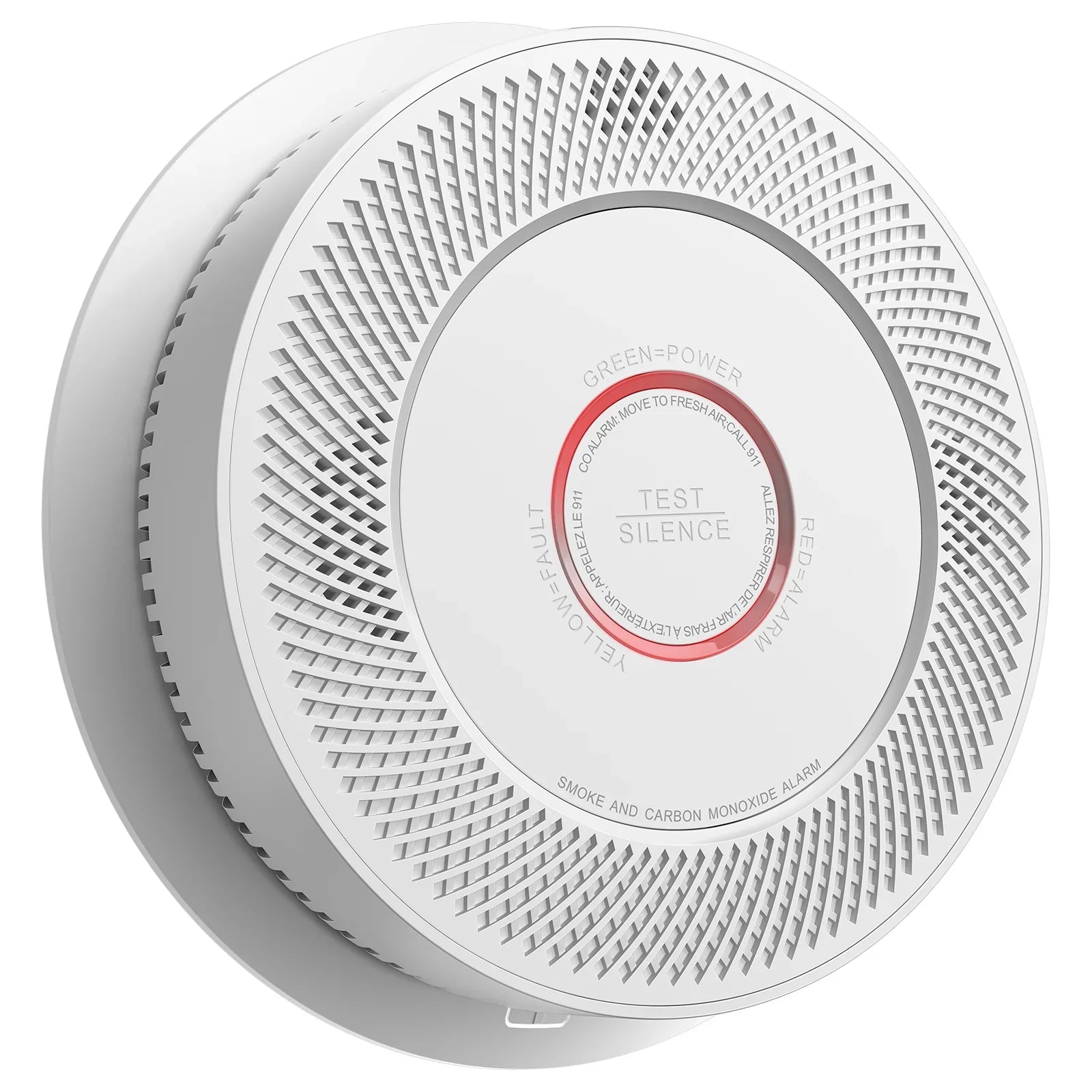
- Interconnection: Wireless interconnected
- Smoke detection: Smoke detector
- Carbon monoxide detection: CO detector
First Alert SMICO100

- Sensor type: Electrochemical and ionization
- Power source: Battery operated; includes 9V alkaline battery
- Battery replaceability: Yes
GS886F-H02 hardwired smoke and CO alarm
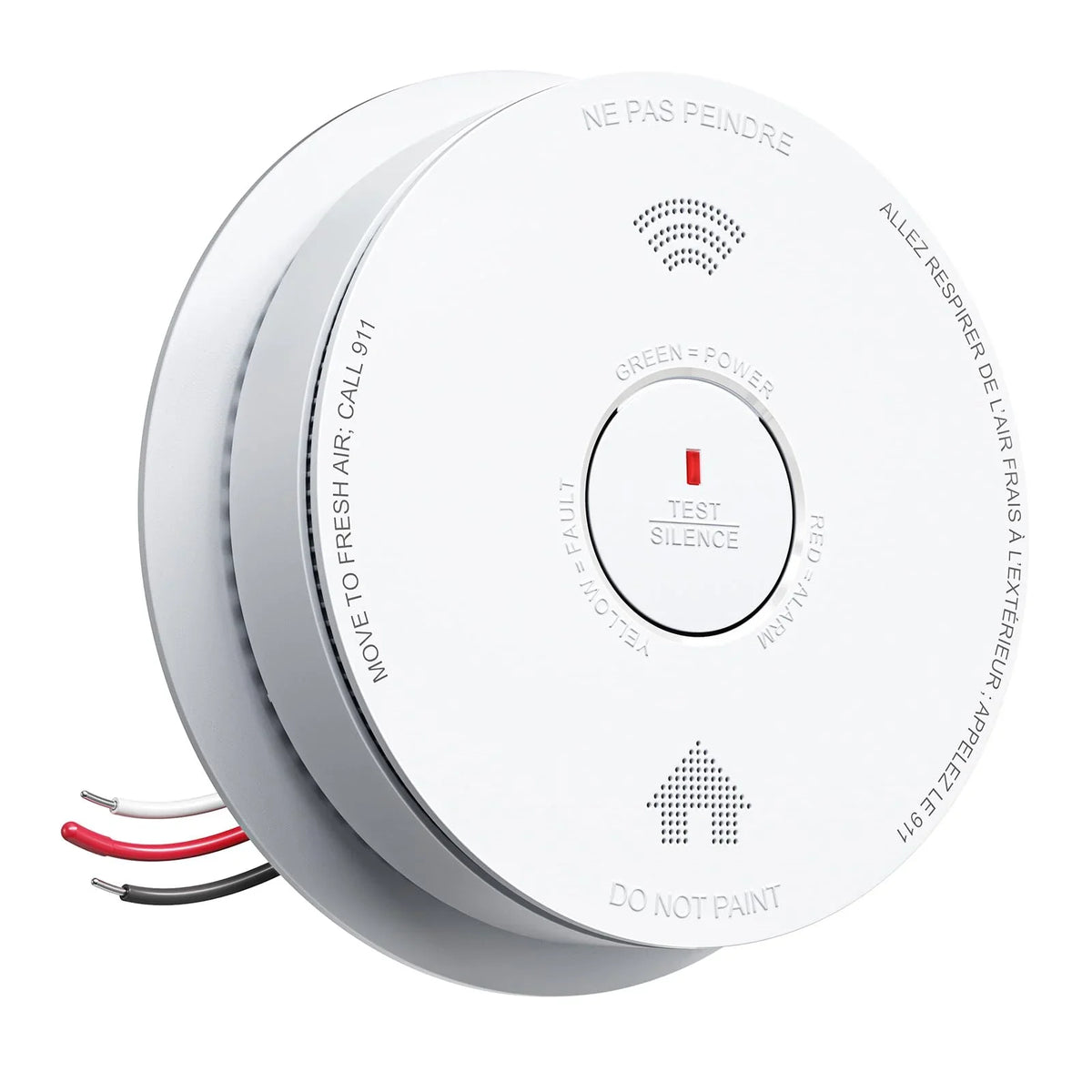
- Power supply: 120V AC / 60Hz
- Sensors: Multi-criteria optical and electrochemical
- Hardwired interconnection capacity: Up to 18 alarms: 12 smoke and 6 non-smoke
The GS886A-3RFDT wireless interconnected smoke and CO alarm is our best overall pick for households seeking both smoke and carbon monoxide detection with wireless alarm interconnection. For a standalone smoke alarm, a hardwired setup, or replaceable-battery combination protection, these alternatives suit different home needs.
For the wider category, see the full home security equipment comparison.
For a related need, compare our best thermal imaging camera for home inspection.
How do our recommended picks compare?
| Product | Best for | Alarm type | Power and interconnection | Alarm coverage |
|---|---|---|---|---|
| GS525A photoelectric smoke alarm | Standalone smoke detection | Smoke alarm | Built-in battery; standalone | Smoke only |
| GS886A-3RFDT wireless interconnected smoke and CO alarm | Wireless-linked smoke and CO detection | Smoke and CO alarm | Wireless interconnected | Smoke and CO |
| GS886F-H02 hardwired smoke and CO alarm | Hardwired smoke and CO detection | Smoke and CO alarm | 120V AC; hardwired interconnection | Smoke and CO |
| First Alert SMICO100 | Replaceable-battery smoke and CO detection | Smoke and CO alarm | Battery operated | Smoke and CO |
Which home smoke detector options should you compare?
1. GS525A photoelectric smoke alarm
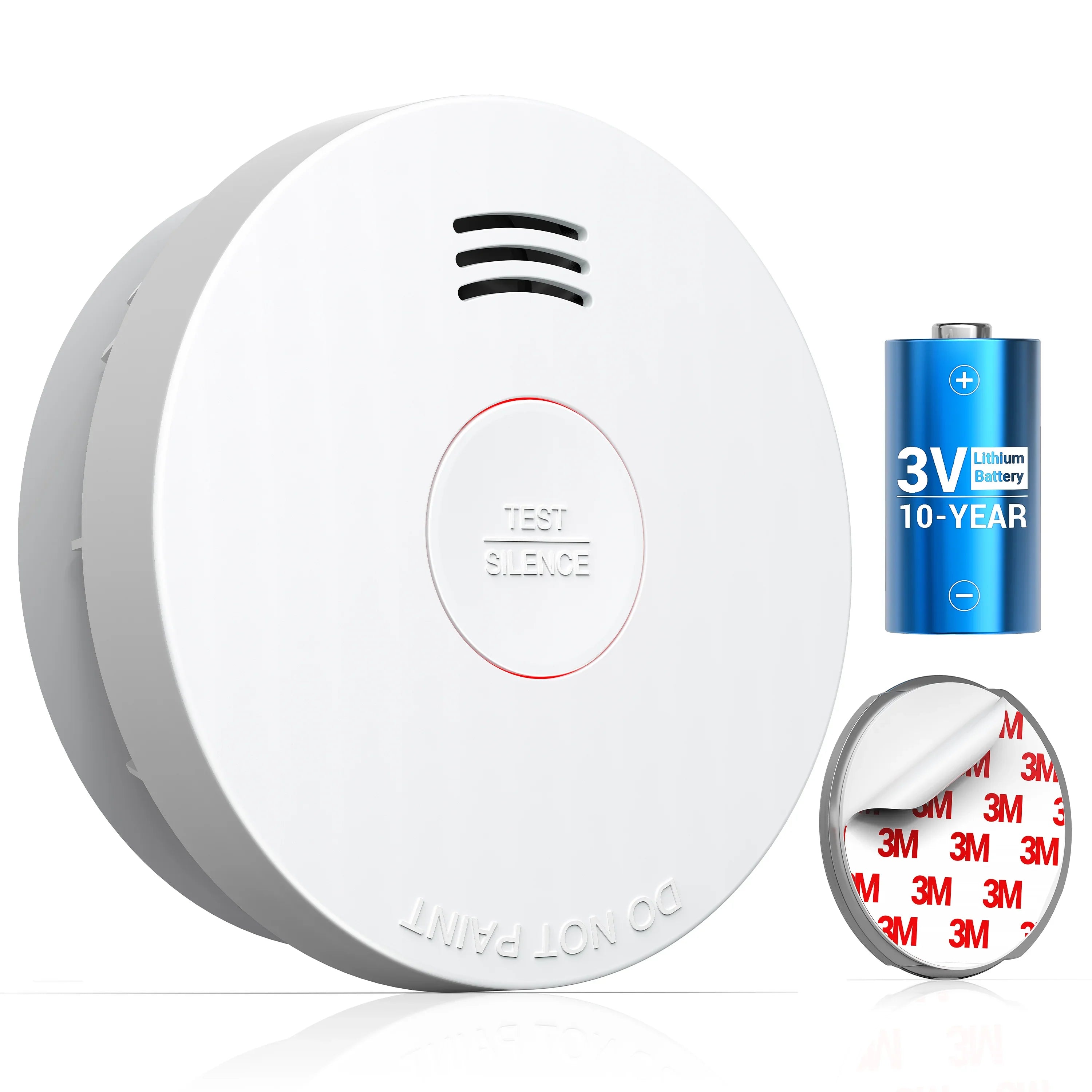
The GS525A is our standalone smoke-alarm pick for shoppers who want photoelectric sensing and do not need an interconnected system or carbon monoxide detection in this unit. Its built-in, non-replaceable battery means battery changes are not part of routine ownership, but the complete alarm must be replaced at the end of its stated 10-year product life. It has a test and silence button, and its published standards include UL 217 and CAN/ULC S531-19. The important tradeoff is scope: this alarm protects only the area where it is installed and does not link to other alarms. Follow the model’s placement instructions, test it weekly, and replace the complete unit at end of life.
Best for A standalone photoelectric smoke alarm with a sealed battery.
| Sensor | Photoelectric sensor |
|---|---|
| Battery | Built-in, non-replaceable 3V lithium battery |
| Standards | UL 217 and CAN/ULC S531-19 |
Pros
- Photoelectric smoke sensing.
- Built-in battery does not require separate battery replacement.
- Test and silence button.
Cons
- Standalone; it does not interconnect with other alarms.
- The battery is non-replaceable, so replace the whole alarm at end of life.
Buy if You want smoke detection in one area and accept replacing the complete alarm at end of life.
Skip if You need carbon monoxide detection or want alarms to interconnect.
Sources: Product source
2. GS886A-3RFDT wireless interconnected smoke and CO alarm Best Overall
The GS886A-3RFDT is our best overall recommendation for households that want a combination alarm with wireless interconnection. It detects both smoke and carbon monoxide, so one unit covers two alarm functions, and its wireless link is the defining difference from standalone choices. That makes it a practical candidate when you want connected alarms without selecting a hardwired model. Before buying, compare its installation requirements with your home’s needs. It is not the right match if you need a smoke-only unit or specifically require a hardwired connection.
Best for Households seeking wireless interconnection and combined smoke and CO detection.
| Interconnection | Wireless interconnected |
|---|---|
| Smoke detection | Smoke detector |
| Carbon monoxide detection | CO detector |
Pros
- Wireless interconnection is documented.
- Detects both smoke and carbon monoxide.
- Combines two alarm functions in one product.
Cons
- Not the hardwired option in this comparison.
- Confirm power and installation details in the product documentation before purchase.
Buy if You want a wireless-interconnected alarm that detects both smoke and carbon monoxide.
Skip if You specifically need a hardwired alarm or a smoke-only standalone detector.
Sources: Product source
3. GS886F-H02 hardwired smoke and CO alarm Another Option
The GS886F-H02 is our pick for a home where a hardwired, interconnected combination alarm suits the existing installation. It detects smoke and carbon monoxide, uses 120V AC power, and has a non-replaceable CR17450 lithium backup battery. Its published specifications list multi-criteria optical and electrochemical sensing, a 10-year product life, and hardwired interconnection for up to 18 alarms. This breadth of documented features is useful when choosing a model to coordinate with an existing wired system, but compatibility and wiring need to be checked rather than assumed. The installation instructions call for a qualified electrician and compliance with local electrical code. Choose another option if you do not have a compatible hardwired setup.
Best for Homes with a suitable hardwired alarm system needing smoke and CO detection.
| Power supply | 120V AC / 60Hz |
|---|---|
| Sensors | Multi-criteria optical and electrochemical |
| Hardwired interconnection capacity | Up to 18 alarms: 12 smoke and 6 non-smoke |
Pros
- Detects smoke and carbon monoxide.
- Hardwired interconnection is documented.
- Has a non-replaceable lithium backup battery.
Cons
- Requires a suitable hardwired installation.
- The backup battery is not replaceable.
Buy if You need a hardwired, interconnected combination alarm and can confirm installation compatibility.
Skip if You need a standalone or wireless alarm, or do not have a suitable hardwired installation.
Sources: Product source
4. First Alert SMICO100 Alternative Pick
The First Alert SMICO100 is our alternate pick for shoppers who want a battery-operated combination alarm and prefer a replaceable battery. It detects smoke and carbon monoxide, uses electrochemical and ionization sensors, and includes a replaceable 9V alkaline battery. A latching alarm indicator is documented as a way to identify the unit that initiated an alarm or low-battery warning; a test and silence button is also listed. This combination may fit a location where a battery-powered unit is preferred. Its sensing approach differs from the photoelectric-only GS525A, so compare the specific features and your household’s needs rather than treating one sensor type as universally best.
Best for A battery-operated combination alarm with a replaceable battery.
| Sensor type | Electrochemical and ionization |
|---|---|
| Power source | Battery operated; includes 9V alkaline battery |
| Battery replaceability | Yes |
Pros
- Combines smoke and CO detection.
- Includes a replaceable 9V alkaline battery.
- Has a test and silence button.
Cons
- Battery replacement is part of upkeep.
- Check the product information if interconnection is important to your installation.
Buy if You want smoke and CO detection and the ability to replace the included 9V battery.
Skip if You need a hardwired alarm.
Sources: Product source
How did we choose these recommendations?
- Compared published specifications and documented features, including sensing, power, and interconnection.
- Considered whether each product detects smoke alone or combines smoke and carbon monoxide detection.
- Looked at the practical difference between standalone, wireless-interconnected, and hardwired-interconnected arrangements.
- Matched each recommendation to a defined household need using the products’ documented features.
We researched and compared published product specifications, documented features, and the sources linked beside each pick.
What should you look for when choosing home smoke detector?
Decide what each location needs
Map the locations where you need alarms and determine whether each needs smoke detection alone or combined smoke and CO detection. The GS525A is the smoke-only choice in this comparison. The other three combine smoke and CO detection. Check local requirements and product instructions when planning placement; do not assume that one combination unit covers every location in a home.
Choose an interconnection arrangement
If one alarm sounding should connect with others, compare the documented arrangements. The GS886A-3RFDT is wireless interconnected. The GS886F-H02 is hardwired interconnected, with a published capacity of up to 18 alarms. The GS525A is standalone. Verify compatibility and system details before adding a unit to an existing installation.
Compare battery upkeep
A replaceable battery and a sealed battery create different maintenance routines. The First Alert SMICO100 includes a replaceable 9V alkaline battery. The GS525A uses a built-in, non-replaceable battery and requires replacement of the complete alarm at end of life. The GS886F-H02 has a non-replaceable backup battery and AC power. Follow the particular model’s instructions.
Match power to the installation
Do not select a hardwired model without confirming the electrical setup. The GS886F-H02 is specified for 120V AC and requires attention to wiring compatibility; its instructions call for a qualified electrician. For a wireless model, review its setup instructions before installation. Consider the First Alert or GS525A when their documented battery configurations fit the intended location.
Review instructions and finish safely
Before installation, read the model’s directions for placement, testing, silence controls, and end-of-life replacement. The GS525A instructions call for weekly testing and state that the complete alarm is replaced every 10 years. Do not disable or remove an alarm to address a nuisance signal. Treat alerts seriously and follow the manufacturer’s emergency directions.
Which home smoke detector is the best fit for your household?
Start with the job the alarm needs to do. If you want an alarm that detects both smoke and carbon monoxide and connects wirelessly with other alarms, the GS886A-3RFDT is the strongest match among these picks. Its documented combination of detection types and wireless interconnection makes it the best overall choice for that use—not a universal winner for every installation.
For a smoke-only alarm in one area, the GS525A is a simpler match: it is photoelectric, standalone, and uses a built-in battery that is not replaceable. Homes with a compatible wired system can consider the GS886F-H02, while the First Alert SMICO100 suits shoppers who want a combination alarm with a replaceable battery. Confirm local requirements and installation compatibility before choosing. To check an Amazon listing, search the exact product name and verify that it matches the intended model.
Do you need smoke detection alone or a smoke and CO combination?
A smoke-only unit and a combination alarm do different jobs. The GS525A is documented as a standalone smoke alarm, so it is the focused choice in this group when you only need smoke detection at that location. It does not provide CO detection, and it cannot alert other alarms through an interconnection system.
The other three products are documented as combination smoke and CO alarms. The GS886A-3RFDT adds wireless interconnection; the GS886F-H02 pairs combination detection with hardwired interconnection; and the First Alert SMICO100 offers a battery-operated configuration with a replaceable battery. Those differences can guide room-by-room planning, but a combination device should not be assumed to meet every local placement or code requirement. Check the instructions for each selected alarm and follow applicable local rules.
FAQ
Which pick is best overall?
The GS886A-3RFDT is the best overall pick for households seeking wireless interconnection alongside smoke and CO detection. That recommendation is tied to that specific use. If you need a hardwired installation, a smoke-only alarm, or a replaceable-battery combination unit, another product here may fit better.
Which detector is only for smoke?
The GS525A is the smoke-only option in this comparison. It is a standalone photoelectric alarm and does not detect CO or interconnect with other alarms. Its built-in battery is not replaceable; the complete alarm is replaced at the end of its stated product life.
Which models detect carbon monoxide as well as smoke?
The GS886A-3RFDT, GS886F-H02, and First Alert SMICO100 are combination smoke and CO alarms. The GS886A-3RFDT supports wireless interconnection, the GS886F-H02 supports hardwired interconnection, and the First Alert SMICO100 is battery operated with a replaceable battery.
Is the GS886F-H02 a suitable replacement for any wired alarm?
Do not assume it is compatible with every wired installation. The GS886F-H02 uses 120V AC and hardwired interconnection. Check the product instructions and existing wiring, and use a qualified electrician as directed. Follow local electrical code.
Which alarm has a replaceable battery?
The First Alert SMICO100 is documented as battery operated, includes a 9V alkaline battery, and has a replaceable battery. The GS525A battery is non-replaceable, and the GS886F-H02’s backup battery is also non-replaceable. Follow each product’s instructions for upkeep.
How often should I test a smoke alarm?
Follow the instructions for the exact alarm you install. The GS525A instructions recommend pressing its test button weekly. The product instructions also explain testing and silence controls; do not use a silence feature as a substitute for investigating a real alarm or addressing a fault.
Which home smoke detector should you buy?
For most homes, start with the GS886A-3RFDT wireless interconnected smoke and CO alarm. For another option, compare the First Alert SMICO100. Need the use-case pick? Consider the GS886F-H02 hardwired smoke and CO alarm.
- Best Overall: GS886A-3RFDT wireless interconnected smoke and CO alarm
- Alternative Pick: First Alert SMICO100
- Another Option: GS886F-H02 hardwired smoke and CO alarm
When was this guide last updated?
- November 07, 2026: Editorial research prepared. Product specifications and source images reviewed.