


1Zpresso K-Ultra

- External grind adjustment: Over 100 clicks, with 20 microns per step
- Burr: Heptagonal conical K burr
- Catch cup: Magnetic twist-off cup with 35-40g capacity
1Zpresso Q Air

- Grind adjustment: Internal adjustment of 25 microns/click
- Weight: 365g
- Grounds capacity: 15~20g
1Zpresso J-Ultra

- Burr and grind adjustment: Coated burr designed for espresso, with 8-micron adjustments
- Catch cup: Magnetic twist-off cup with 35-40g capacity
- Disassembly: Tool-free
The best manual coffee grinder is the 1Zpresso K-Ultra because its outer dial has over 100 clicks and its magnetic cup holds 35-40g. Pick the 1Zpresso J-Ultra if you make espresso most days, or the 1Zpresso Q Air if you pack a pour-over kit for trips.
More in this category: Kitchen & Coffee buying guides.
You may also like our Best Kitchen & Coffee.
How do the top options for manual coffee grinder compare?
| Product | Best for | Grind adjustment | Stated capacity | Burr or build |
|---|---|---|---|---|
| 1Zpresso K-Ultra | Switching between brew methods | Over 100 clicks, with 20 microns per step | 35-40g catch cup | Heptagonal conical K burr |
| MAVO Phantox Pro | Changing settings with the chamber closed | 0.0167 mm per click | Not specified | Patented Starblade burr |
| 1Zpresso J-Ultra | Espresso with small changes between shots | 8-micron adjustments | 35-40g catch cup | Coated burr designed for espresso |
| 1Zpresso Q Air | Solo pour-over at home or away | Internal adjustment of 25 microns/click | 15~20g grounds | Heptagonal burr |
| Timemore × Millab M01 | An outer dial with metal parts | External dial | Not specified | 44mm Pineapple burrs |
| Timemore Chestnut C2S | Simple daily grinding for one | Adjustable | 25g beans | Aluminium body |
| Comandante C40 MK4 Nitro Blade | A steel body and a spare jar | Not specified | 40 grams of coffee per jar | Nitro Rex® steel burr |
| Kinu M47 Simplicity | Fine changes without fixed clicks | Stepless, as fine as 5 microns | 40 g | 47 mm conical burrs |
| KINGrinder P2 | Light travel with small doses | 0.0333mm per click | Up to 20g per batch | SUS420 conical burr |
| Hario Skerton Pro Ceramic Coffee Mill (MMCS-2B) | Collecting grounds for larger home brews | Not specified | 100g listed coffee capacity | Heatproof borosilicate glass bowl |
Which manual coffee grinder options did we compare?
1. 1Zpresso K-Ultra Best Overall
This is the best fit if you make espresso in the morning and pour-over later. The external dial lets you adjust the grind without opening the grinder. The magnetic cup twists off when you’re ready to transfer the grounds and brew. The crank folds for storage, which helps if you share counter space. At 700g, it’s more practical as your main home grinder than in a lightweight travel kit.
Best for Switching between brew methods
| External grind adjustment | Over 100 clicks, with 20 microns per step |
|---|---|
| Burr | Heptagonal conical K burr |
| Catch cup | Magnetic twist-off cup with 35-40g capacity |
Pros
- The external dial is easy to reach when you switch between brewing methods.
- The magnetic cup twists off, making it easy to empty the grounds after grinding.
- The crank folds for storage, reducing the space the grinder takes up between uses.
Cons
- Its 700g weight matters if you carry your coffee kit often.
- At 20 microns per step, this grinder offers less precise adjustments than the espresso pick.
Buy if You want one grinder for espresso, filter coffee, and coarser brews.
Skip if You make espresso most days and want finer steps between settings.
Sources: Product source Additional specifications
2. MAVO Phantox Pro

Choose this grinder if you switch between espresso and filter coffee and prefer external adjustments. The outer ring lets you adjust the grind while keeping the grounds chamber closed. Its distinct steps are easy to count when you record a setting for each recipe. The included brush helps with cleaning, and the bag provides a place for storage. If you often brew for two, compare your usual dose with the chamber size.
Best for Changing settings with the chamber closed
| Burr | Patented Starblade burr with a 45 mm outer diameter, a 37.5 mm inner diameter, and 160 spikes |
|---|---|
| Grind adjustment | 0.0167 mm per click, with 120 clicks per revolution |
| Adjustment ring | External ring that can be operated with the grounds chamber closed |
Pros
- The adjustment ring works with the grounds chamber closed.
- The click marks make it easier to record the grind setting for each brewing method.
- A cleaning brush and storage bag come with the grinder.
Cons
- Making a substantial change to the grind can take more clicks with smaller adjustments.
- The burr dimensions give you little help choosing a batch size.
Buy if You want to turn an external adjustment ring while keeping the grounds chamber closed.
Skip if You prefer to switch brewing methods with fewer clicks when you need a larger grind adjustment.
Sources: Product source Additional specifications
3. 1Zpresso J-Ultra Best for Espresso
This is the pick for someone who makes espresso and likes to make small changes between shots. The coated burr is designed for espresso, and the 8-micron adjustments help when you want a subtle change in grind size. The magnetic cup twists off, and the grinder comes apart without tools for cleaning. The folding crank helps it fit in a drawer, though the grinder still weighs 700g.
Best for Espresso with small changes between shots
| Burr and grind adjustment | Coated burr designed for espresso, with 8-micron adjustments |
|---|---|
| Catch cup | Magnetic twist-off cup with 35-40g capacity |
| Disassembly | Tool-free |
Pros
- The 8-micron adjustments make it easy to choose a small change.
- The grinder comes apart without tools, so you can disassemble it for cleaning.
- The included brush and blower help clear loose grounds.
Cons
- At 700g, this grinder is less practical if you’re assembling a lightweight travel kit.
- The espresso focus has less value if you mostly make filter coffee.
Buy if You make espresso regularly and prefer a grinder that adjusts in small steps.
Skip if You mainly brew pour-over while traveling and prefer to carry a lighter grinder.
Sources: Product source Additional specifications
4. 1Zpresso Q Air Alternative Pick
Consider this compact grinder if you prepare pour-over for one and want to brew while traveling. At 365g, its weight is easy to account for when deciding what to pack. It comes apart without tools and keeps your grind setting when you take it apart. The main trade-offs are the small grounds chamber and the internal adjustment dial. Plan for another round of grinding if your recipe calls for a larger dose.
Best for Solo pour-over at home or away
| Grind adjustment | Internal adjustment of 25 microns/click |
|---|---|
| Weight | 365g |
| Grounds capacity | 15~20g |
Pros
- The 365g weight suits a kit you carry often.
- You can take it apart for cleaning and keep your setting.
- The compact grinder fits easily beside a small brewer on your counter.
Cons
- The 15~20g grounds chamber may require several rounds of grinding when preparing coffee to share.
- The inner dial takes an extra step to reach.
Buy if You want a compact pour-over grinder and usually make coffee for one.
Skip if You often prepare larger batches or prefer to adjust the grind using an external dial.
Sources: Product source Additional specifications
5. Timemore × Millab M01

Consider this model if a dial you can reach from the outside matters to you. Its all-metal dial parts and stainless steel burr construction may appeal if those are the parts you care about most. The maker also lists how close the burrs sit at their finest setting. That figure describes the gap, so shoppers who track changes between clicks will need a step size to compare.
Best for An outer dial with metal parts
| Burr | 44mm Pineapple burrs |
|---|---|
| Grind adjustment | External dial with five all-metal components |
| Burr gap tolerance | 0.0725mm at the finest setting |
Pros
- The outside dial is easy to reach during a change.
- The dial has five all-metal components.
- The burr construction uses 420 stainless steel.
Cons
- The listed burr gap offers little help when comparing click size.
- The figures for the grinder’s construction offer limited guidance on how much coffee to load.
Buy if You prefer an external adjustment dial and want metal parts in the grinder’s construction.
Skip if You rely on a stated adjustment step size when comparing grinders for espresso.
Sources: Product source Additional specifications
6. Timemore Chestnut C2S
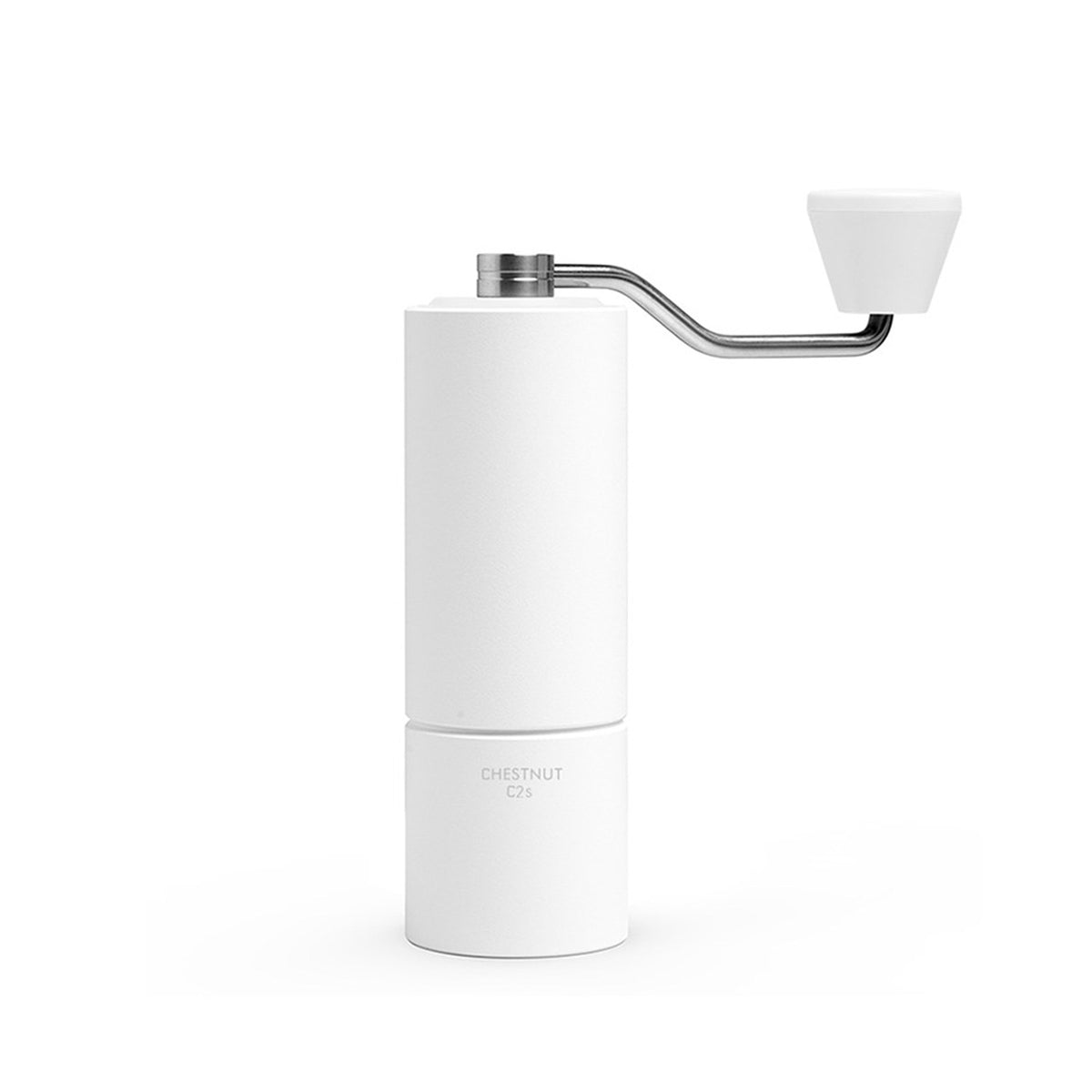
Choose this model if you brew for yourself and want a simple grinder with a metal body. The 25g bean capacity gives you a clear limit when you plan how much coffee to weigh out. Its stated frame height helps you check whether it fits in your cupboard. You can change the grind, though the listed settings give little detail for someone who wants to track fine changes between espresso shots.
Best for Simple daily grinding for one
| Bean capacity | 25g |
|---|---|
| Body material | Aluminium |
| Stated frame height | 17 cm |
Pros
- The 25g bean capacity gives you a clear loading limit.
- The grinder has an aluminium body.
- You can check the stated frame height against your storage space.
Cons
- Larger recipes may need a second load of beans.
- The settings give limited detail for fine changes between espresso shots.
Buy if You usually brew for yourself and want an adjustable grinder with a metal body.
Skip if You want fine steps with a stated size for regular espresso.
Sources: Product source Additional specifications
7. Comandante C40 MK4 Nitro Blade
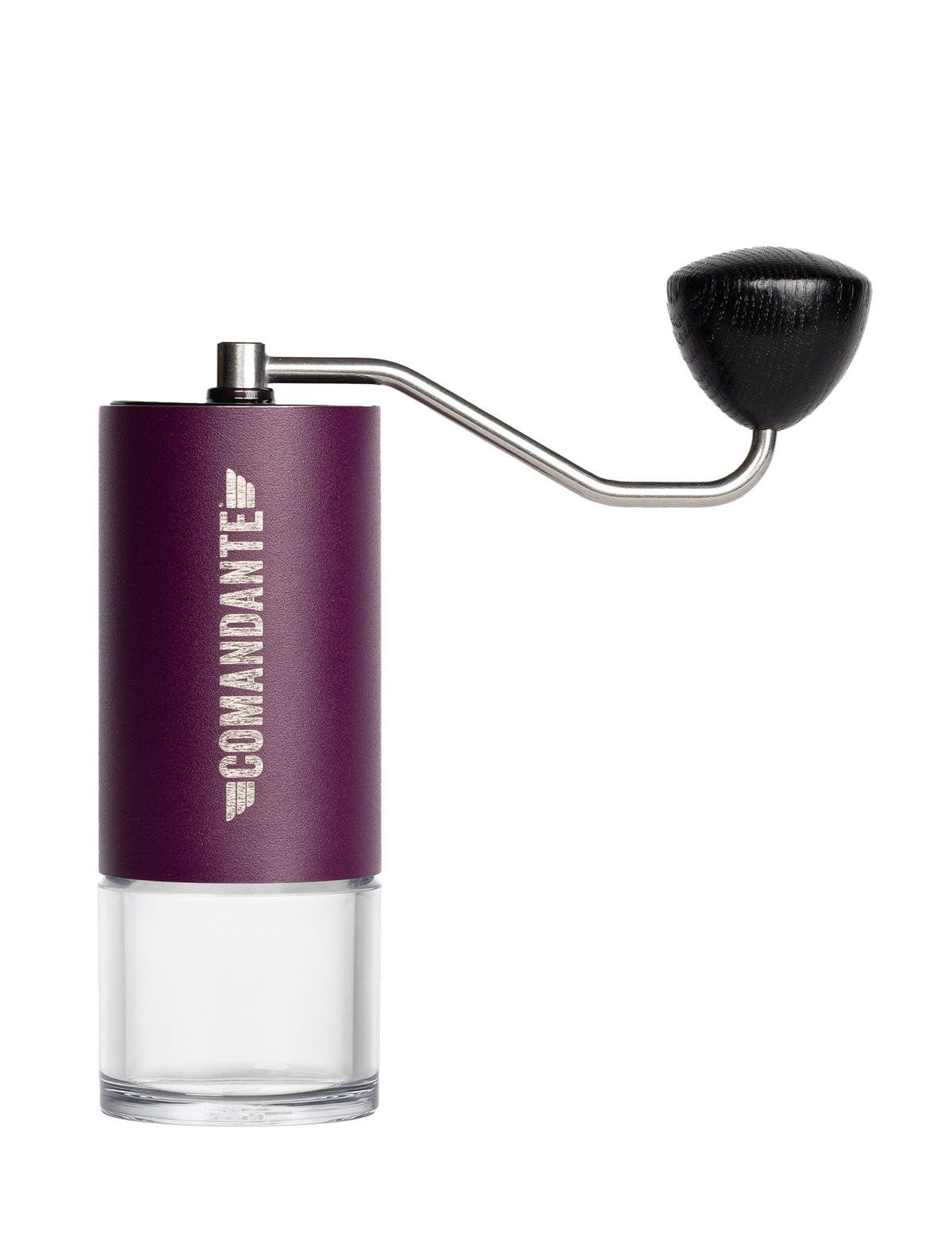
Consider this grinder if you prefer a steel body and want a spare jar ready. It includes a brown glass jar and a clear polymer jar, each holding 40 grams of coffee. When you brew away from home, you can choose which jar to pack. Use that capacity to plan how much ground coffee you can collect or store in one jar.
Best for A steel body and a spare jar
| Body material | Stainless steel |
|---|---|
| Burr material | Nitro Rex® steel |
| Included bean jars | One brown glass jar and one clear polymer jar |
Pros
- Both the body and the burr use steel.
- The glass and polymer jars give you a choice of materials.
- You can store coffee in the spare jar while you continue using the other jar.
Cons
- The glass jar needs care when you pack or wash it.
- The stated jar capacity gives limited guidance on how much to load.
Buy if You prefer a grinder with a steel body that includes both glass and polymer jars.
Skip if You need a different format than this model offers for your space and routine.
Sources: Product source Additional specifications
8. Kinu M47 Simplicity

Choose this grinder if you prefer making small espresso adjustments with a dial that has no fixed clicks. You can set the dial anywhere between positions that would be fixed on a stepped grinder. Record the dial position carefully so you can return to a setting you liked. It includes a travel case, though at 1050 g it’s better suited to home use.
Best for Fine changes without fixed clicks
| Burr size and shape | 47 mm conical burrs |
|---|---|
| Grind adjustment | Stepless, as fine as 5 microns |
| Catch cup attachment | 11 magnets |
Pros
- The dial lets you make changes without jumping between fixed clicks.
- Magnets hold the catch cup in place.
- The EVA travel case gives you a dedicated place for the grinder in your bag.
Cons
- The 1050 g weight adds to what you carry.
- A stepless dial takes careful notes when you switch settings often.
Buy if You want a dial that moves freely as you fine-tune espresso.
Skip if You prefer to count clicks so you can return to a previous grind setting.
Sources: Product source Additional specifications
9. KINGrinder P2

Choose this grinder if you travel light and prepare one small batch at a time. It weighs 330g and takes up to 20g per batch, so check your usual dose before packing. The included brush and tool-free design make it easier to remove loose grounds. Its wider grind steps leave fewer options for small adjustments between espresso shots.
Best for Light travel with small doses
| Weight | 330g |
|---|---|
| Grinding capacity per batch | Up to 20g |
| Adjustment per click | 0.0333mm |
Pros
- The 330g weight helps keep a travel kit light.
- The grinder comes apart without tools for cleaning.
- A cleaning brush comes with the grinder.
Cons
- A recipe over the batch limit takes more than one load.
- The wider grind steps give you less control when making small adjustments for espresso.
Buy if You prefer to pack light and usually prepare small batches of coffee.
Skip if You make larger batches or want very small changes to tune espresso.
Sources: Product source Additional specifications
10. Hario Skerton Pro Ceramic Coffee Mill (MMCS-2B)

Consider this grinder if you brew at home and prefer a large bowl for collecting grounds. Its listed coffee capacity is 100g, which helps when you plan a larger batch. The burr section comes apart for washing, and the glass parts are dishwasher safe. Wash the other parts by hand and pack the glass bowl carefully for travel.
Best for Collecting grounds for larger home brews
| Listed coffee capacity | 100g |
|---|---|
| Bowl material | Heatproof borosilicate glass |
| Dishwasher-safe parts | Glass parts only |
Pros
- The listed coffee capacity is helpful when planning larger brews.
- The burr section comes apart for washing.
- The glass parts can go in the dishwasher.
Cons
- The glass bowl takes care when you pack or handle it.
- The parts other than glass need to be washed by hand.
Buy if You prepare coffee at home and prefer a large glass bowl for collecting grounds.
Skip if You want a grinder that’s easy to carry as part of a lightweight travel kit.
Sources: Product source Additional specifications
How do we choose the manual coffee grinder?
- We researched and compared how each grinder changes settings, including how you reach the dial.
- We researched and compared the stated brewing methods and the features that suit each one.
- We compared stated capacities with the needs of solo drinkers and households that brew together.
- We researched and compared grinder weights, handle designs, and access for cleaning to assess everyday use.
We researched and compared published product specifications, documented features, and the sources linked beside each pick.
What should you look for when buying manual coffee grinder?
How much coffee should your grinder hold?
Choose a grinder with enough capacity for the amount of coffee you usually brew. Before you shop, weigh that amount and check whether the listed capacity describes beans, grounds, or the jar. Bean capacity tells you how much you can load into the grinder before grinding. Cup or jar capacity tells you how much coffee that container can hold. If you brew more on weekends, decide whether you’re comfortable grinding in separate batches. That approach can save space during the week.
Should you choose a stepped or stepless dial?
Choose a stepped dial for settings you can count, or a stepless dial for very small changes. A stepped dial moves through fixed points, which helps when you save settings for different brewers. A stepless dial moves freely through its range and suits a person who likes to fine-tune espresso. If two people share the grinder, agree on where to record each setting. Include the bean and brew method so the setting still makes sense when you use it later.
What does burr size tell you when shopping?
Burr size tells you how large the grinding component is. Check the listed brewing methods and grind controls to see whether they suit your routine. The listed burr gap describes the distance between the burrs at a given setting. Click size describes how much the setting changes with each click of the dial. Because these figures describe different measurements, compare burr gaps with burr gaps and click sizes with click sizes. For espresso, consider how easily you can make a small adjustment and return to that setting later.
Which cleaning features make a hand grinder easier to keep clean?
Look for parts you can reach easily and cleaning steps that fit your routine. Tool-free disassembly helps when you want to brush out grounds after switching beans. A design that keeps its setting after cleaning can save time, especially if you use the same recipe each morning. Check the maker's care directions before using water. With the Hario Skerton Pro Ceramic Coffee Mill (MMCS-2B), the burr section comes apart for washing and only the glass parts can go in the dishwasher.
What features make a manual grinder easier to store?
Choose a grinder that fits your storage space with the handle in its usual position. Measure your shelf or drawer before comparing it with the manufacturer’s listed height. Check whether that measurement covers the grinder body or the entire grinder. A folding crank can help the grinder fit in a narrow drawer. A case can keep the grinder parts together when you pack for travel. If you store it beside your brewer, leave room to lift it and remove the grounds cup.
What is the best manual coffee grinder for home use?
The 1Zpresso K-Ultra is the best fit for households that use several brewing methods. Its external dial makes it easy to switch between finer and coarser settings. Record the setting for each brewer so you can return to it later. The magnetic cup twists off when you’re ready to transfer the coffee grounds. The folding crank saves space if you put your coffee equipment away after breakfast.
Choose a home grinder based on how much coffee you prepare and which methods you use most. The 1Zpresso Q Air takes up less space if you make one small morning pour-over. Weigh the beans for your usual recipe before deciding how much capacity you need. If two people use different methods, consider how often you’ll need to adjust the grind. An accessible dial helps if you change settings more than once in the morning.
Which manual coffee grinder is best for espresso?
The 1Zpresso J-Ultra is our pick for people who prepare espresso most days. It has a coated burr designed for espresso and makes adjustments in 8-micron steps. A micron is a tiny unit of length used here to describe each adjustment. Small steps help you refine the grind if your shot flows too quickly. Keep the amount of coffee steady when you try the next grind setting.
Consider the Kinu M47 Simplicity if you prefer to adjust the dial without fixed clicks. Its stepless dial lets you choose any point in the adjustment range. That flexibility makes it especially helpful to record the position you prefer. If you switch between espresso and pour-over daily, counting clicks can make settings easier to revisit. Choose the adjustment style that fits how you brew.
Which hand coffee grinder works well for pour-over?
The 1Zpresso Q Air was designed for pour-over and suits a small serving. Its 15~20g grounds capacity is better suited to a single cup than a large batch. If your usual recipe fits, the compact grinder can save space near the kettle. The adjustment dial sits inside the grinder, so consider how often you switch beans. If you follow the same recipe each day, you’ll need to reach the dial less often.
The MAVO Phantox Pro fits a routine where you change settings often. Its outer ring moves with the grounds chamber closed, and pour over is among its stated brew methods. If you mostly make the same cup each morning, the adjustable Timemore Chestnut C2S is another option. Its 25g bean capacity makes it easy to judge if your full recipe fits before you start grinding.
What should you look for in a hand grinder for travel?
Choose a manual grinder based on your usual brewing volume and how much weight you’ll carry. The KINGrinder P2 weighs 330g and has a capacity of up to 20g per batch. It suits a lightweight travel kit if your usual recipe stays within that limit. If you prepare coffee for two, you may need to refill the grinder. Leave enough space to weigh the beans and set the cup down while you refill.
The 1Zpresso Q Air weighs 365g and comes apart without tools while retaining its grind setting. You can remove old grounds and return to the same recipe the following morning. A glass bowl may suit your routine if you prepare most of your coffee at home. When you travel, the glass bowl needs careful packing. Check where you’ll place the grinder and allow enough clearance to turn the handle.
How do you compare a manual coffee grinder with a coffee maker with a grinder?
Consider a separate manual grinder if you already have a brewer you like or use several kinds. First, grind the beans by hand, then transfer the grounds to your brewer. With that extra step, one grinder can serve a pour-over cone and an espresso machine. Check whether the grinder’s adjustment range suits both brewing methods. Also check whether its capacity can handle the largest batch you expect to brew.
A coffee maker with a built-in grinder can suit a home that uses the same brewer each day. Compare the grind controls, how you reach the parts for cleaning, and how much coffee the machine makes. For an espresso machine with a grinder, look at how finely you can change the setting. Count the steps you take on a busy morning, from filling the grinder to clearing out the used grounds.
FAQ
Can a manual coffee grinder grind fine enough for espresso?
Yes, some manual burr grinders can produce a grind fine enough for espresso. The 1Zpresso J-Ultra is our espresso pick because it lets you make small adjustments. When you find a setting you like, record it alongside the name of the beans. Keep the dose steady to see how a small adjustment affects your shot.
What is the best home burr coffee grinder for both espresso and filter coffee?
The 1Zpresso K-Ultra is the best fit here if you make espresso and filter coffee. Its listed brewing methods include espresso and pour-over, and the external dial makes adjustments easy. Record a starting setting for each brewer you use. When you try different beans, start there and adjust the grind gradually based on how the coffee brews.
Is a manual burr grinder a good first coffee grinder for home?
Yes, a manual burr grinder is a good first home grinder for small batches. Start with one brewing method and see how changes to the grind affect your coffee. The Timemore Chestnut C2S has an adjustable grind and a stated capacity for beans. If you often prepare a full pot, check how many refills your usual recipe requires.
Can I use the same hand grinder for French press and pour-over?
Yes, a manual grinder can handle both methods if its settings suit each recipe. The 1Zpresso K-Ultra and MAVO Phantox Pro both list French press and pour-over. For French press, a coarser grind is often a better starting point than for pour-over. Record the setting for each recipe and note when you switch to different beans. Use those notes as a reference the next time you prepare either recipe.
How should I use the capacity numbers in the comparison?
Use each capacity figure to plan for the part or batch it describes. Bean capacity tells you how much to load before you start grinding. Catch cup capacity tells you how much ground coffee the cup can collect. Jar capacity tells you how much coffee fits inside that particular jar. If your recipe exceeds the grinder’s capacity, divide your weighed beans into separate loads.
How often should you clean a manual coffee grinder?
Follow the maker’s care directions and brush away loose grounds when they accumulate. Inspect the parts you can reach when you switch beans or unpack after a trip. Use water only on the parts the maker identifies as washable. If disassembly changes the grind setting, record the dial position before you start.
Which manual coffee grinder should you buy?
For most homes, start with the 1Zpresso K-Ultra. For another option, compare the 1Zpresso Q Air. Need the use-case pick? Consider the 1Zpresso J-Ultra.
- Best Overall: 1Zpresso K-Ultra
- Alternative Pick: 1Zpresso Q Air
- Best for Espresso: 1Zpresso J-Ultra
When was this guide last updated?
- November 2026: Editorial research prepared. Product specifications and source images reviewed.